
The drone industry has spent years blaming bandwidth for problems that were never really caused by bandwidth.
Look, that’s an uncomfortable statement because it challenges one of the safest assumptions in satellite communications: more capacity automatically solves everything. It doesn’t. Sometimes it simply allows inefficient systems to waste data faster.
The announcement of OneLinQ Edge 1.0 at MWC Shanghai 2026 deserves attention for a reason that has surprisingly little to do with satellites. The headline figure—compressing video to roughly 10% of its original size while reportedly cutting satellite transmission costs by as much as 90%—will attract plenty of headlines. Those numbers are impressive. They’re also the least interesting part of the story.
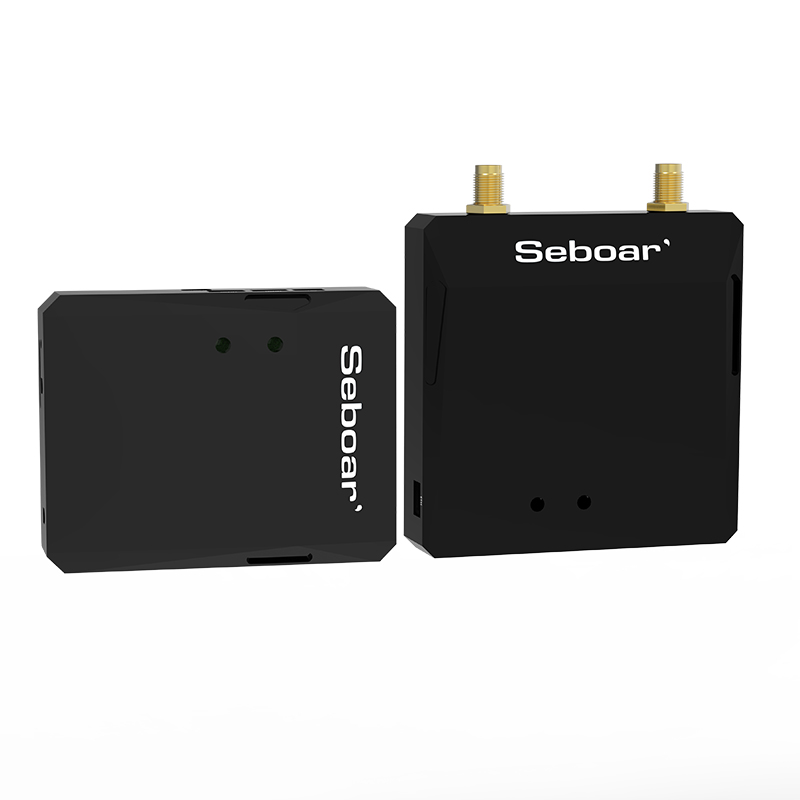
The architectural shift matters far more. For decades, the workflow barely changed. A camera captured everything. The terminal transmitted everything. A cloud server sorted out the useful information after the expensive transmission had already happened. Every unnecessary pixel completed the same costly journey as every critical one.
That model now looks strangely outdated. Instead of treating a satellite terminal as a passive modem, OneLinQ’s new edge computing architecture turns it into an active decision-maker. Video can be analyzed, optimized, and compressed before touching the satellite link. Wait, let me double-check that… no, that’s actually the disruptive piece. The communication device is beginning to inherit responsibilities traditionally reserved for cloud infrastructure.
That changes the economics. Not the bandwidth. Economics. Everyone keeps asking how many satellites need to be launched to support more UAV traffic. Almost nobody asks a far more valuable engineering question: why are we transmitting so much irrelevant information in the first place?
A routine power-line inspection illustrates the problem perfectly. Ninety-nine percent of the captured footage often contains… well, nothing particularly interesting. Endless utility poles. Empty terrain. Identical transmission towers. Blue sky. Yet conventional transmission systems faithfully upload every frame as though each contains a critical defect.
That is astonishingly inefficient. Edge intelligence attacks the waste before the radio ever becomes busy. Here’s the thing, the satellite industry may quietly be entering its second competitive era. The first phase revolved around constellation deployment, spectrum availability, coverage maps, and orbital capacity. Those problems haven’t disappeared, but they’re no longer the only variables limiting operational performance.
Now the competition moves much closer to the sensor. Video encoding algorithms. Context-aware compression. Real-time bandwidth estimation. On-device AI inference. Adaptive bitrate decisions driven by scene complexity rather than static configuration. Notice what’s missing from most product announcements? Nobody talks about computational overhead.
Compressing video to one-tenth of its original size sounds spectacular until someone asks how much silicon is required to accomplish that in real time. How many watts does the processor consume? What inference latency is introduced before transmission? Does aggressive semantic compression remove subtle image artifacts that later prove essential during infrastructure inspection or disaster response?
Those numbers remain absent. And they matter enormously. The drone industry has developed a habit of celebrating compression ratios without discussing what gets sacrificed. AI-assisted encoding works because it makes decisions. Every decision carries risk. If an algorithm concludes that a distant thermal anomaly is “background noise,” the resulting bandwidth savings suddenly become irrelevant.
Engineers know this. Marketing departments usually don’t. The broader implication extends well beyond satellite terminals. Drone video links themselves may be evolving from communication hardware into distributed AI infrastructure. That’s a remarkably different business.
Imagine an inspection UAV no longer streaming continuous 4K footage across a satellite link. Instead, the aircraft identifies structural defects locally, extracts only meaningful image regions, attaches metadata describing confidence scores, and transmits evidence rather than raw observation.
The communication payload shrinks dramatically. Cloud processing shrinks with it. Satellite operating expenses decline. Mission endurance suddenly becomes more valuable than raw downlink throughput. That progression sounds obvious after someone says it aloud. Funny how the industry spent years chasing faster pipes instead.
Real-world deployments—including disaster response following the Myanmar earthquake, remote power inspections, off-road endurance events across desert environments, and various industrial monitoring operations over the past two years—suggest this architecture has already moved beyond laboratory demonstrations. Field validation rarely eliminates engineering trade-offs, but it does separate theoretical promise from operational feasibility.
The companies building tomorrow’s UAV communication systems may discover an uncomfortable reality. RF performance alone won’t differentiate premium platforms much longer.
The winners could instead be the manufacturers whose terminals know exactly which data never deserved to leave the drone in the first place.