
There seems to be a persistent obsession with the size of VTOL fixed-wing aircraft: larger wingspans, longer ranges, higher payloads, and more sensors and antennas. For years, it seems everything has been about pursuing bigger. However, the truly practical deployments are not based on these factors at all. Currently, smaller systems, faster deployment times, fewer configuration requirements, and lower operating drag are what truly make VTOL fixed-wing aircraft useful.
Back in 2015, when the Chinese aviation industry showcased systems like the “Wing Loong” and early civilian VTOL concepts at the Beijing Airshow, the engineering narrative was heavily centered around endurance, autonomous cruise capability, and complex mission integration. The language felt very aerospace. Long-range reconnaissance. Integrated strike capability. Redundant subsystems. Full logistical ecosystems.
Understandable, honestly. That was the era. The fixed wing VTOL concept itself was still proving legitimacy outside military circles. Engineers needed to convince people that a hybrid aircraft could vertically launch like a helicopter and still transition into efficient forward flight without becoming an aerodynamic compromise disaster.
Some of those early systems succeeded. Some absolutely did not.
I still remember watching one demonstration years ago where a prototype transitioned beautifully into forward flight… and then spent the next 40 seconds oscillating like a dying fish because the control tuning was completely wrong. Everyone pretended it was wind. It was not wind. The market learned quickly.
Today’s fixed wing VTOL UAV ecosystem feels less theatrical and far more operational. That matters. Because once drones leave exhibition halls and start flying daily inspection routes, mountain surveillance missions, emergency response patrols, or industrial thermal scans, the engineering priorities change very fast. Reliability becomes more valuable than spectacle. A lot more valuable.
The Real Problem Was Never Vertical Takeoff. Vertical takeoff is actually the easy part now. Brushless motors improved. Flight controllers matured. Power distribution systems became more reliable. Even mid-tier autopilot stacks can now handle transition logic reasonably well. The hard part is operational balance.
Look, fixed wing VTOL aircraft live in constant compromise. A larger battery improves endurance but increases stall characteristics during transition. Additional sensors improve situational awareness but create thermal and power-management headaches. Bigger airframes stabilize cruise flight while simultaneously making field deployment more annoying.
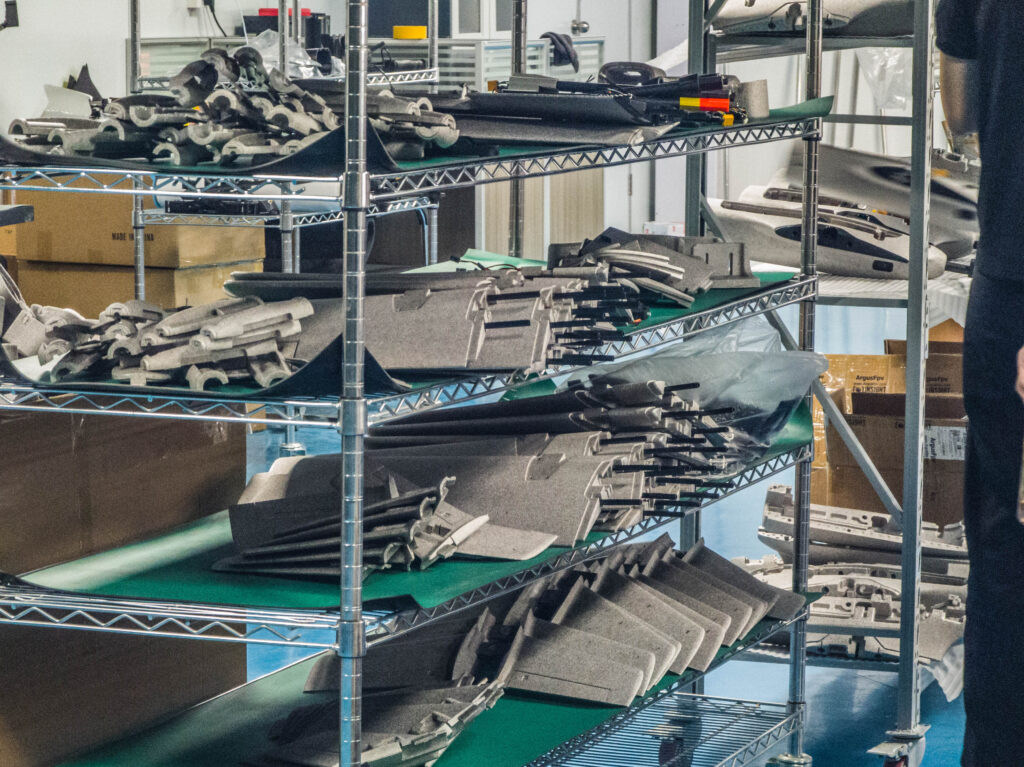
That tradeoff never disappears. Our own engineering discussions around compact VTOL surveillance platforms became surprisingly aggressive at one point (wait, I should clarify — aggressive in the engineering-review sense, not people yelling at each other… mostly).
One side wanted maximum endurance. Another prioritized portability. Both were technically correct. The result was a smaller VTOL fixed wing platform philosophy built around practical deployment instead of headline specifications. That sounds simple. It wasn’t.
For example, the Seboar VTOL fixed wing configuration uses a 1200 mm wingspan and lightweight EPP airframe rather than chasing oversized military-style proportions. On paper, that seems modest. In practice, it changes everything about transport logistics, launch preparation, and maintenance cycles.
A 1380 g airframe behaves very differently in field operations compared to large composite-heavy systems. You notice it immediately. Especially in mountainous inspection environments where operators carry everything manually.
Sensors Changed the Entire Market. This is where the market became genuinely interesting. Early VTOL UAV conversations focused mostly on flight. Now the conversation is increasingly about perception. Not speed. Not wingspan. Perception.
Modern operators care less about whether the aircraft can technically fly 100 kilometers and more about whether it can actually identify useful information during the mission window. That shift explains why multi-sensor payload integration became such a defining trend in the fixed wing VTOL UAV market.
Visible imaging alone is no longer sufficient in many industrial or security scenarios. Thermal imaging changed nighttime surveillance economics entirely. Laser ranging added measurable spatial awareness instead of vague visual estimation. And combining all three systems inside lightweight stabilized payloads? That used to be difficult. Very difficult.
A three-axis stabilized gimbal with visible imaging, thermal sensing, and laser ranging sounds straightforward when written in specification sheets. Mechanically, it becomes ugly fast. Vibration isolation, stabilization latency, thermal drift, payload balancing — every small mistake compounds during forward flight. Especially during windy transition phases.
The interesting thing is that compact systems are now reaching capability levels previously associated with significantly larger UAV categories. For instance, integrating a 2K visible-light camera, 384×288 thermal imaging sensor, and laser ranging module into a stabilized 117 g payload would have sounded optimistic several years ago for smaller civilian VTOL aircraft. Now it is becoming normal.
That normalization is reshaping deployment strategy across multiple industries. Powerline inspection crews do not necessarily want runway infrastructure. Environmental monitoring teams operating near forests or mountainous terrain definitely do not want it. Emergency response units care about setup speed more than aerospace elegance. The aircraft becomes a field tool. Not an aviation trophy.
The Fixed Wing Advantage Never Disappeared. People occasionally claim multirotors will eventually replace fixed wing VTOL systems entirely. I doubt it. Physics remains irritatingly stubborn. Multirotors are excellent at hovering precision and localized observation. But once missions involve area coverage, sustained patrol, or long-distance linear inspection, fixed wing efficiency still dominates power consumption behavior.
No marketing department can rewrite aerodynamics. A VTOL fixed wing platform cruising economically around 50 km/h with 60–80 minutes of endurance occupies a very useful operational zone. Particularly when autonomous mission planning and return-to-home behavior are mature enough to reduce pilot workload.
And software maturity matters more now than people admit. Quietly, ground-control ecosystems like QGroundControl and MAVLink-compatible architectures standardized huge portions of UAV operations. That interoperability accelerated development across the industry because teams stopped rebuilding basic mission infrastructure from scratch every single time. Honestly, that probably helped the fixed wing VTOL market more than airframe innovation itself.
The Market Is Becoming Less Military-Looking. That sounds superficial, but it is not. Many earlier VTOL fixed wing designs inherited visual and architectural assumptions from military UAV programs. Long fuselages. Aggressive endurance optimization. Large launch footprints. Civilian operators eventually pushed back.
They wanted systems that fit into vehicles more easily. Systems deployable by smaller crews. Systems that did not require half an hour of assembly beside a road while attracting attention from everyone nearby. That operational realism is shaping newer product categories. Smaller stabilized payloads. Integrated digital transmission systems. Lightweight composite or EPP structures. Faster autonomous mission workflows. Portable field operation. Even wireless transmission priorities evolved.
A few years ago, people treated digital image transmission mainly as a convenience feature. Now stable integrated telemetry-and-video links fundamentally affect mission confidence. Adaptive frequency handling and long-distance HD transmission are becoming baseline operational expectations rather than premium extras.
Because losing video during inspection work is not merely annoying. It can invalidate the mission. The Next Phase Will Be Quietly Autonomous. Not “science-fiction autonomous.” Boring autonomous. Which is exactly what industry customers actually want. Waypoint execution. Automated patrol repetition. Object tracking. Route consistency. Stable data collection. Predictable return behavior. Repeatability is commercially valuable.
A lot of the future fixed wing VTOL UAV market will probably revolve around reducing operator cognitive load rather than endlessly increasing aircraft complexity. That may sound less exciting than giant endurance claims or dramatic military imagery. But it is probably healthier for the industry. Because mature technology eventually becomes invisible.
These days, few people specifically praise the reliability of an elevator or the stability of a router’s Wi-Fi. The same applies to autopilot systems on passenger planes; as long as they consistently function properly, they’re taken for granted. Fixed-wing vertical takeoff and landing drones are gradually moving towards this state as well. In a sense, when an industry begins to emphasize stability and sustainable operation rather than flashy features, it truly signifies maturity.