
A shocking stat to start: one corner of the drone market is growing at just 6.6% CAGR through 2033, while another forecast screams 17% within five years. Same ecosystem. Same hardware class. Wildly different expectations.
Something doesn’t add up.
Let’s talk about the foldable FPV drone manufacturer—a niche that looks deceptively simple from the outside. Small drones. Folding arms. Consumer-friendly packaging. But behind that tidy exterior is one of the most fragmented, quietly aggressive battlegrounds in hardware right now.
And no, it’s not being driven by hobbyists anymore.
The myth of “steady growth”
6.6% CAGR sounds… polite. Safe. The kind of number consultants put in decks when they don’t want to scare investors.
But then you see the 17% projection, and suddenly the tone shifts. That’s not stability—that’s acceleration disguised as uncertainty.
Here’s the thing. Both numbers are technically correct. They’re just talking about two different realities.
The 6.6% trajectory reflects the broader FPV ecosystem, weighed down by regulatory drag, pilot skill barriers, and hardware commoditization.
The 17% spike? That’s the foldable segment bleeding into commercial workflows—film crews, inspection teams, even agricultural scouting units. That’s where the heat is.
And foldable designs are at the center of it.
Foldable isn’t about convenience. It’s about access.
People keep saying foldable drones win because they’re portable.
That’s… not wrong. But it’s shallow.
Portability isn’t the killer feature. Deployment speed is.
A foldable FPV drone can be pulled out, powered on, and airborne in under a minute. For a filmmaker chasing light, or a surveyor racing weather, that’s not a feature—it’s survival.
Look, traditional FPV rigs were never designed for this. They were built for enthusiasts. Tinkerers. People who enjoyed soldering as much as flying.
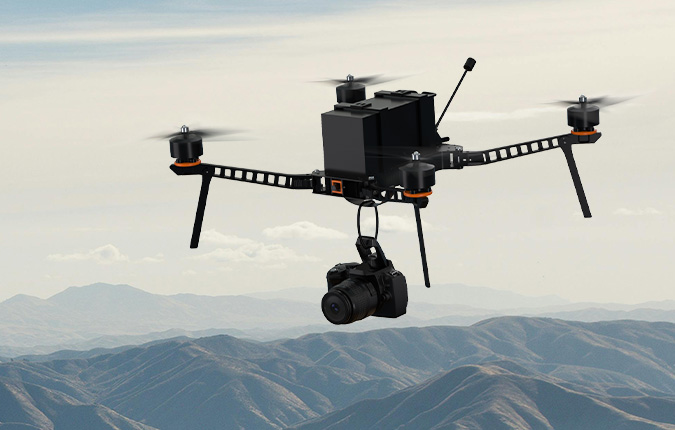
Foldable FPV drones flipped that script.
They removed friction.
And once you remove friction, you invite scale.
The dominance of DJI isn’t just about money
Let’s get blunt.
When a company like DJI is pulling in over $3 billion in revenue, you’re not competing on features anymore. You’re competing on ecosystem gravity.
And that’s where most smaller foldable FPV drone manufacturers quietly lose.
Hubsan at $200 million, iFlight at $150 million, Holy Stone at $100 million—these aren’t small companies. But in this space, they operate like specialized satellites orbiting a massive planet.
Wait, that’s not entirely right.
They’re carving out niches—budget-friendly entry points, modular customization, community-driven builds.
Smart move.
Fragmentation is the real story
The FPV drone market isn’t consolidated. It’s fractured—almost deliberately.
You’ve got:
BETAFPV (~$50M) and Makerfire (~$40M) targeting entry-level pilots
Component specialists like CADDX FPV and Lumenier pushing camera and frame innovation
Mid-tier players like Hubsan and Holy Stone balancing price and usability
Hardcore enthusiast brands like iFlight leaning into performance and customization
And then there are the outliers—companies like Apex Drone (Shenzhen) experimenting with modular designs, or smaller names like Happymodel and Axisflying building cult-like followings.
This isn’t a clean hierarchy. It’s a messy ecosystem.
Which is exactly why foldable designs matter so much—they’re one of the few unifying trends across all tiers.
Asia-Pacific isn’t just leading—it’s defining the rules
China doesn’t just manufacture FPV drones.
It defines what an FPV drone is.
From DJI to EHang to Autel Robotics, the center of gravity is firmly in Asia-Pacific. And it’s not shifting anytime soon.
This matters more than people think.
Because innovation cycles are now geographically compressed. When a new foldable design hits Shenzhen, it doesn’t take years to propagate globally—it takes months.
Sometimes weeks.
And Western competitors? They’re not keeping up. Not in hardware, not in supply chain efficiency, not in iteration speed.
The quiet role of AI and VR
Everyone loves to talk about camera upgrades. Better resolution. Higher frame rates.
That’s table stakes now.
The real shift is happening in AI-assisted flight systems and VR-integrated control experiences.
AI is reducing the skill ceiling—automating obstacle avoidance, stabilizing footage, optimizing flight paths.
VR is reshaping immersion—turning FPV from a hobby into something closer to embodied experience.
Put those together, and something interesting happens.
You don’t need expert pilots anymore.
You need operators.
That distinction is subtle. But it changes the entire market.
The problem nobody wants to fix
Regulation.
Safety concerns.
Operator skill gaps.
These aren’t new issues. But they’re becoming more visible as FPV drones move into commercial spaces.
Here’s the uncomfortable truth: the industry doesn’t actually want strict standardization.
Because standardization slows innovation.
But without it, you get fragmentation, inconsistent safety protocols, and a patchwork of regulations that make scaling difficult.
So companies are stuck.
Push too hard for regulation, and you limit growth.
Ignore it, and you risk backlash.
Foldable drones are winning—but not for the reason you think
Yes, foldable FPV drones dominate the market.
Yes, portability is a big factor.
But the deeper reason is this:
They align with how people actually want to use drones now.
Not as projects.
Not as experiments.
But as tools.
For filming.
For inspection.
For content creation.
For work.
And work doesn’t tolerate friction.
A market that looks bigger than it is
Let’s circle back to that $3,660 report price.
That’s not unusual for market research. But it says something.
This industry is still being “interpreted” rather than fully understood.
There’s no single narrative yet.
Is it a consumer electronics market?
A professional tools market?
A hybrid?
Depends who you ask.
And that ambiguity is why the growth forecasts are so inconsistent.
So where does the foldable FPV drone manufacturer go from here?
Short answer: sideways, then up.
Growth won’t be linear. It’ll come in bursts—triggered by breakthroughs in AI, battery tech, or regulatory clarity.
Some manufacturers will double down on ecosystem lock-in (DJI already has).
Others will lean into modularity and openness.
A few will disappear.
That’s inevitable.
Look, here’s the part most analysts miss.
This isn’t just a drone story.
It’s a story about how hardware adapts when it stops being a hobby and starts becoming infrastructure.
Foldable FPV drones are just the first visible layer.
Underneath that? A much bigger shift is happening.
And we’re only catching glimpses of it.