
With the ongoing urbanization, skyscrapers have gradually become more common. Have we ever considered how do these buildings stay so clean? In the past, if we looked up, we would see some “spidermen” outside the buildings. They will sit on wooden planks secured by ropes to perform cleaning work on the building. However, traditional cleaning methods are not only inefficient, but also“spidermen” frequently perform work at heights, which poses significant safety risks. Therefore, people gradually began using machines to replace manual high-altitude cleaning operations. Cleaning drones have burst onto the scene.
First, what is a cleaning drone? Cleaning drones utilize cleaning devices such as robotic arms, high-pressure water jets, and rotating brushes, combined with specialized cleaning solutions, to achieve efficient and safe cleaning operations. The primary components of a cleaning drone consist of the drone platform, cleaning equipment (such as high-pressure water sprayers or high-pressure steam chambers), a control system, a water or steam supply system, and a data transmission and monitoring system. It also includes basic components such as the airframe, battery, motor, propeller, flight control system, and sensors.
First, what is a cleaning drone? Cleaning drones utilize cleaning devices such as robotic arms, high-pressure water jets, and rotating brushes, combined with specialized cleaning solutions, to achieve efficient and safe cleaning operations. The primary components of a cleaning drone consist of the drone platform, cleaning equipment (such as high-pressure water sprayers or high-pressure steam chambers), a control system, a water or steam supply system, and a data transmission and monitoring system. It also includes basic components such as the airframe, battery, motor, propeller, flight control system, and sensors.
Workflow for Cleaning Drones:
How exactly do cleaning drones work? The cleaning drone operates by using ropes and cables to control its vertical movement to achieve the purpose of cleaning. As shown in the image, the cleaning drone has been equipped with a high-pressure water jet measuring over ten centimeters in length. An external water pipe was also connected to draw water from the ground. Upon reaching the cleaning zone, the drone will first spray cleaning solvent to dissolve stains on the glass. Then clean using a high-pressure water jet. In areas without access to water, you can also bring a large water tank for cleaning the drone. This is what cleaning drones looks like in action.
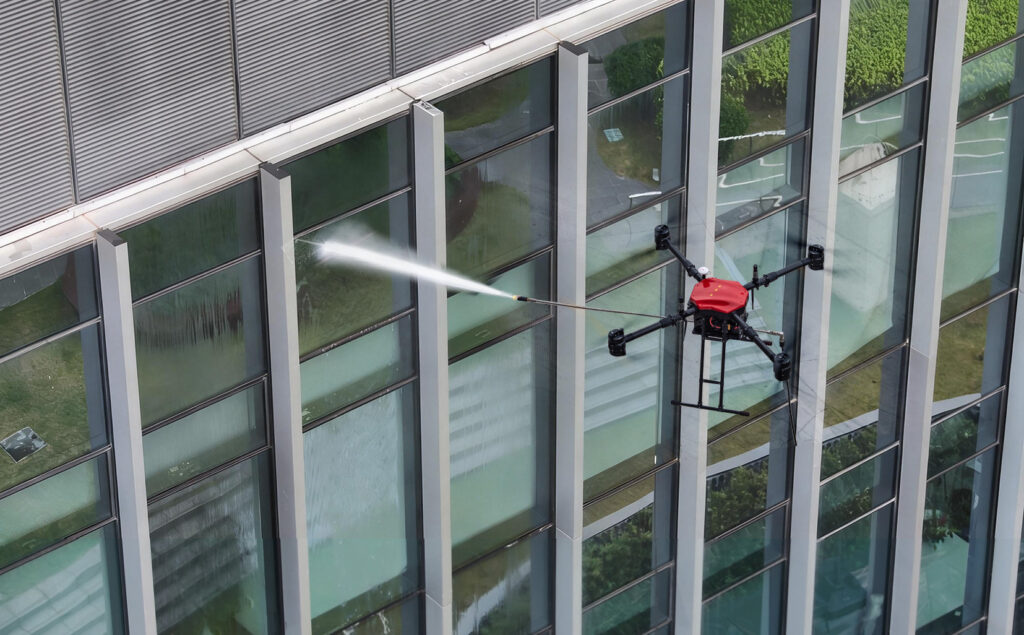
Cleaning drones provide advanced unmanned aerial vehicle solutions for complex and challenging high-altitude cleaning operations. It encompasses cleaning, surface treatment, and inspection, addressing one of the most critical challenges in modern maintenance.
Compared to traditional manual high-altitude cleaning operations, cleaning drones offer the following advantages:
- Safety
Cleaning drones eliminates the risk of manual labor in hazardous conditions or at heights. Operators only need to control the equipment from the ground, ensuring their safety. Operators only need to control the equipment from the ground, ensuring their safety. Completely eliminated the risk of human falls from heights.
- Flexibility
Traditional manual high-altitude operations struggle to access hard-to-reach areas such as high-rise buildings, bridges, and towers. However, cleaning drones can flexibly clean areas that are inaccessible or difficult for humans to reach. It can adapt to various complex terrains and environments.
- Cost-effectiveness and efficiency
Cleaning drones can operate continuously without frequent breaks, thereby reducing the time and manpower required for cleaning tasks. Moreover, cleaning drones can be controlled to reduce the use of water and cleaning agents, reduce costs and environmental impact.
- Simple and easy to get started with
Compared to traditional high-altitude cleaning operations, the advent of cleaning drones has eliminated the need for people to worry about “fear of heights”. All that’s required is to operate the drone. Cleaning drones feature automated capabilities and provide intuitive control over the drone, simplifying the cleaning process.
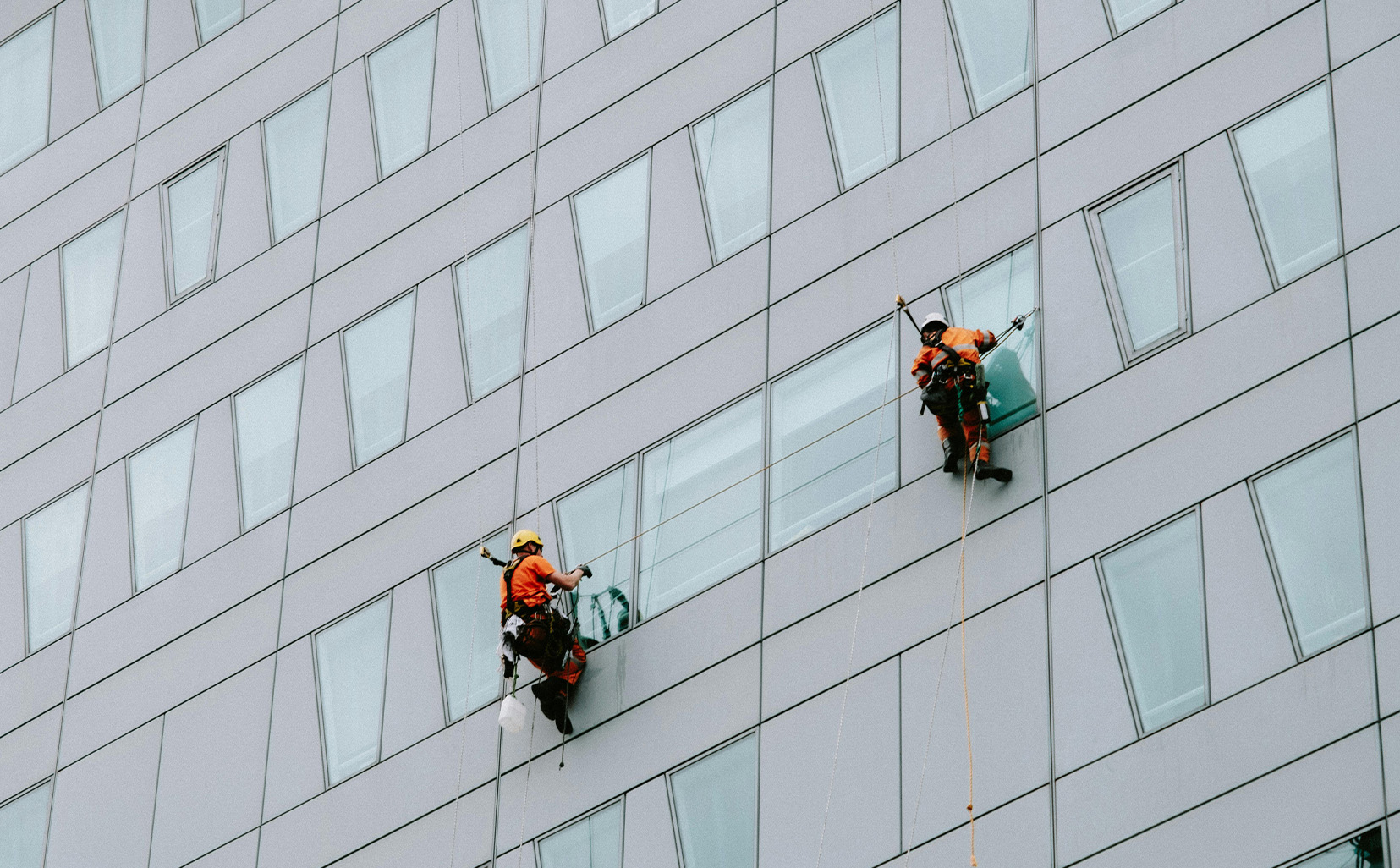
Traditional “Spider-Man” high-altitude cleaning operations
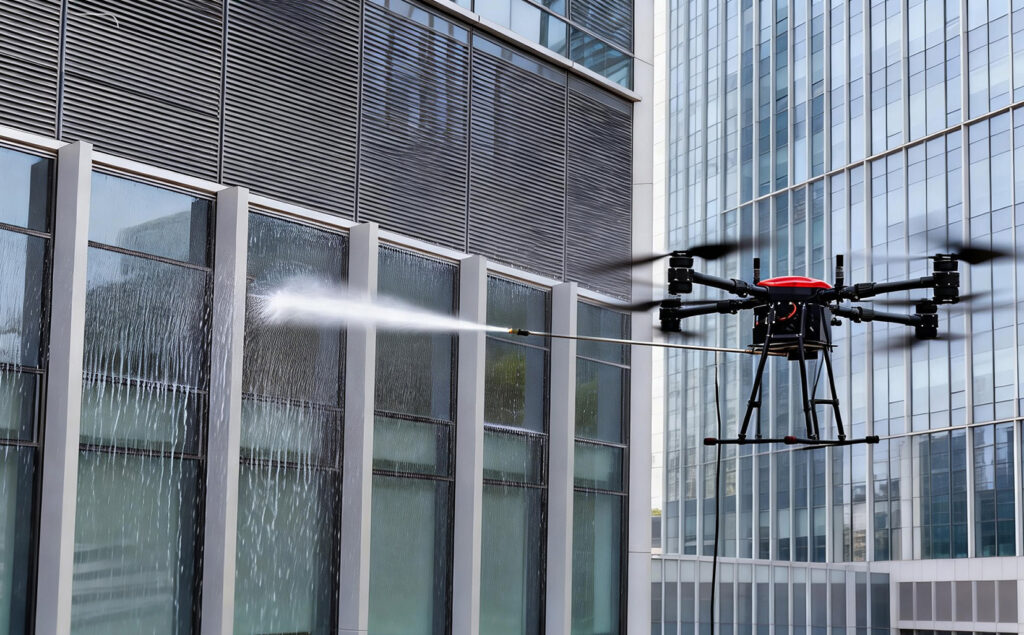
High-altitude cleaning operations using cleaning drones
Cleaning Drone Application Scenarios
- Firefighting
Cleaning drones equipped with infrared sensors detect the temperature distribution of fires. This is ideal for fire rescue operations in high-rise buildings and forest fires. Moreover, it can be equipped with multiple fire extinguishing agents, allowing selection of different extinguishing media such as water or flame retardants based on the specific fire conditions.
- Building Exterior Wall Cleaning:
Cleaning drone’s camera captures the distribution of stains on exterior walls, while the LiDAR performs obstacle detection. This enables the cleaning of high-altitude facilities such as the exterior walls of high-rise buildings.
In addition to cleaning building exteriors, we can also clean the following facilities:
- Energy Facility Maintenance:
Solar panels, wind turbine blades, etc.
- Industrial Equipment Cleaning:
Storage tanks, chimneys, cooling towers, etc.
- Public Facility Cleaning:
Bridge guardrails, sculptures, billboards, etc.
Seboar will continue to explore more application scenarios for drones. We believe that drones will soon be capable of performing other, more complex tasks. Some might worry whether traditional “Spider-Man” performers will lose their jobs. The answer is no. The emergence of cleaning drones does not conflict with “Spider-Man”. There is currently a significant shortage of professional drone operators in the market. After professional training, “Spider-Man” can command cleaning drones to perform high-altitude operations. Seboar believes that in the near future, drone technology keeps personnel away from hazardous work environments, completely eliminating the risk of falls during high-altitude operations.