
Fiber optics or optical fiber is a flexible transparent fiber made of glass or plastic. A fiber optic fpv drone consists of three components: the drone aircraft itself, a cable reel with an optical fiber (for transmitting light), and an optoelectronic converter. Unlike traditional radio frequency-controlled drones, the drone operator uses fiber optics to transmit control signals and video images back and forth.
With conventional radio controlled drones, the primary component used to fly them is the physical spool of the fiber optics (used for storing and deploying optical fibers). This spool consists of a drive system with two planes, an integrated tension control mechanism, and protective housing that protects the fiber optic cable from damage during use. In order for a fiber optic fpv drone to work properly when it is airborne, the fiber optic cable must remain wound around the spool in order to provide continuous length, but the cable must be unwound at a speed of 100m_sec every time that the drone is airborne.
The official standard resolution for transmitting high-definition video from drones is a combination of both camera to video signal (light) transmissions, which are then transferred by fiber-optic cable. The video signal from the drone will change to a direct analog light and will be recognized by the optoelectronic converter, allowing the signal to be transmitted back to the ground operator. The operator will have a clear real-time view of the target as well as the area surrounding it. Once the drone returns to the launch location, the entire fiber optics cable will be automatically retracted back into the spool.
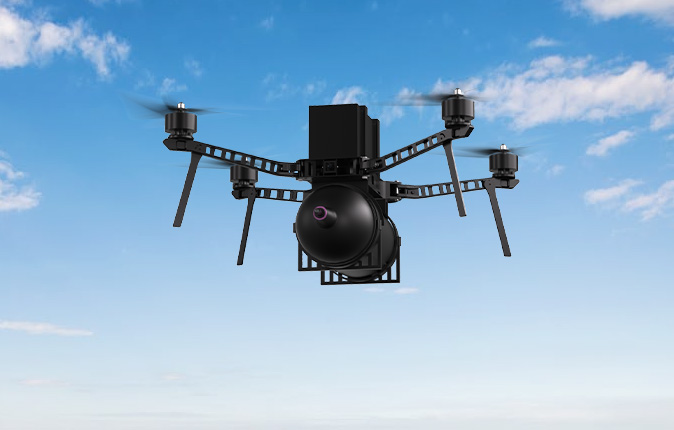
Moving away from wireless communications and to fiber optics has many advantages for the drone world.
Robust Interference Resistance:
Standard radio-controlled drones fall victim to jamming of electronic warfare. The signals can be blocked or captured by an enemy. Using fiber optics, enemy interception of signal is almost impossible, ensuring the reliability and security of information transmission. Consequently, fiber optic FPV drones secure advanced communication and operational secrecy.
Safety and Security:
Standard radio-controlled drones give away the position of the operator because radio signals are easily detectable. In contrast, FPV Fiber Optic drones give owners more security and stealth. This guarantees the safety of the operator while ensuring stable data transmission.
Low latency and High Bandwidth:
Using fiber optics instead of older radio controlled drones allows for greater quality video transmission and significantly less signal latency. Fiber optics result in less data latency, which allows for precise drone control.
Increased operational range:
For aerial work, the cables are bound by the limitation of the length of the fiber optic cable (usually 5-10 kilometres). This will limit the range of aerial drones, in comparison to the range of traditional aerial remote-control communication systems. However, modern developments in the transmission of power via fiber optics have made it possible for drones to receive power via the same fiber optic cable. This solves the issue of limited battery size and greatly improves operational time.
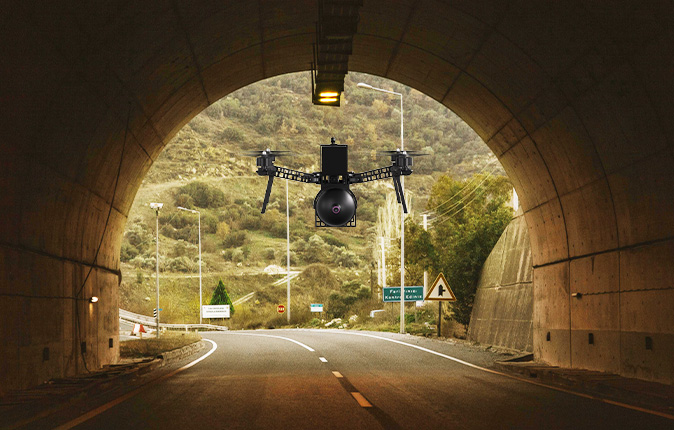
Applications of Fiber-Optic Drones for FPV
Also, fiber optic drones for fpv have some significant benefits, including low latency, high definition video and a greater ability to resist interference, making it possible to deliver both outstanding performance and results across a wide range of scenarios. Most people associate the term “fiber optic drone” with military use (for anti-jamming communications); however, fiber optic drones for fpv have a number of uses that go beyond the battlefield.
Surveillance, Reconnaissance & Security
Fiber optic drones for fpv can be used to offer continuous security surveillance services, which can be used for long-term security needs (such as at borders and critical facilities). With its ability to sustain long periods of time in the air, along with its ability to resist interference from other sources, fiber optic drones for fpv make the best choice for surveillance and security applications.
Emergency Response Services
Therefore, when an emergency occurs (e.g., during an emergency response to a disaster), fiber optic drones for fpv can provide real-time video from locations before any survivors are located or saved, so emergency responders will not be hampered by having to deal with interference to find those rescued.
Drone delivery of medical supplies
The long-range flying capabilities of fiber optic drones make them suited for delivering medical supplies to remote locations. When combined with the anti-jamming features, this guarantees that evacuation routes for the injured remain clear.
Critical infrastructure inspections
Fiber optic fpv drones are capable of providing live, non-contact inspections for various industries like power line inspections and pest control on agricultural land; their inspection data is sent back to the operator in real time while remaining secure. Even in complex electromagnetic environments, successful data transmission can be achieved through interference resistant communication links.
While fiber optic drones have some advantages over other drone types due to their ability to avoid interference and be stealthy, they also face many challenges, including limited applicability, lack of flexibility, and the high costs associated with physical fiber optics. However, Seboar believes that the possibilities for fiber optic drones extend far beyond current applications. In some cases, countries have begun enhancing the technology used to build fiber optic drones so that they use lighter and stronger optical fibers, can carry more payload on the drones, and can adapt better to changing and more complex environments. In the future, as new technologies converge, Seboar believes that fiber optic fpv drones may be used for more applications than just the current applications.