
As I walk down the street, I occasionally hear the sound of drones flying overhead. Drones are becoming increasingly common, and people are constantly exploring new market opportunities for them. This column is about high-speed drones.
High-speed drones, as the name suggests, refer to drones that fly at high speeds and have a high service ceiling.
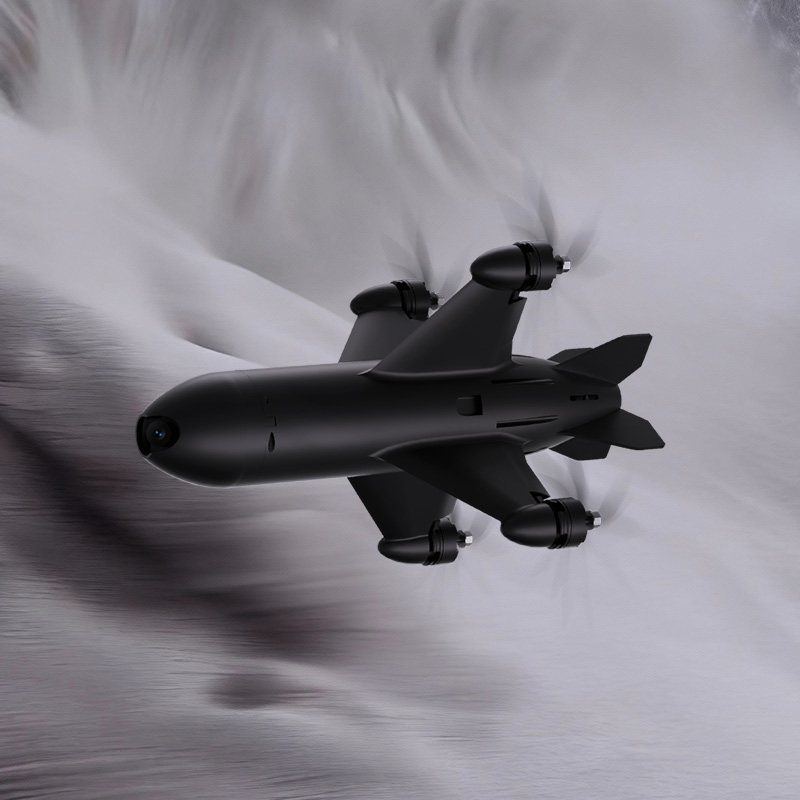
High-speed drones are typically designed with a streamlined, rocket-like shape, based on principles of aerodynamics. As we all know, a streamlined body reduces wind resistance. High-speed drones fly parallel to the airflow, which allows them to travel at higher speeds. If we also incorporate the flip-top battery design at the front of the device, the battery life issue will be resolved as well. With its flip-top design featuring a snap-on closure, changing the battery is a breeze—you’re ready to go anytime, with absolutely no hassle. Finally, it features a video transmission system with a dual-antenna design. When the high-speed drone is in flight, the footage transmitted in real time via the antenna clearly shows the drone’s point of view. It also allows for better control of the drone’s flight, providing the operator with a better flying experience.
The high speed and streamlined design of high-speed drones make them suitable for a wide range of applications. In addition to the military applications we typically think of, it can be used in many other areas: rescue and search operations, emergency deliveries, facility inspections, and more. We will discuss its scope of application in more detail below.
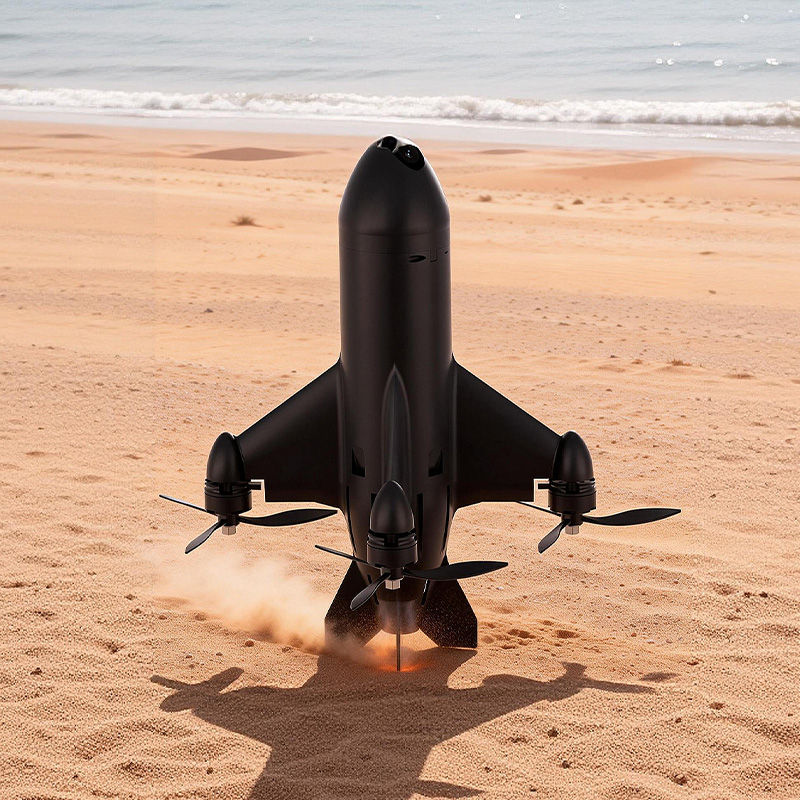
First and foremost is the military aspect, high-speed drones are already well-established in military reconnaissance. It can quickly reach high altitudes over enemy territory to conduct reconnaissance. Moreover, because drones have the inherent advantage of high speed, they are very difficult to hit with ground-based attacks.
High-speed drones can also be used for infrastructure inspections and scientific meteorological observations. The high-definition video and thermal imagery transmitted by high-speed drones during inspections can significantly reduce inspection time. Scientific meteorological observations can be used to track typhoons and to conduct surveys of wildlife populations. The inherent advantages of high-speed drones have significantly improved data collection efficiency.
In addition to the applications mentioned above, high-speed drones can also be used for search and rescue and emergency deliveries. When a disaster strikes suddenly, high-speed drones can fly at high altitudes. When paired with a thermal imaging camera, it can locate survivors directly at night or in thick smoke. The high-speed flight capabilities of high-speed drones give them a significant advantage in logistics and delivery. You can drive through smoothly even when traffic is heavy.
Not only that, but high-speed drones can also be used in the entertainment sector, which interests most people, such as racing and film and television production. Racing is the most active market for drones among the fields most familiar to the general public, and high-speed drones are specifically designed for racing. It can also be used for close-up shots of race cars, capturing the excitement of the race.
Given the current pace of drone development, it may not be long before new drones replace high-speed drones. However, the current development of high-speed drones is truly impressive, and their applications are extremely diverse, touching on virtually every aspect of life. That is why Seboar believes that even though the drone industry is evolving rapidly, high-speed drones will continue to advance alongside it. It will keep pace with the times and become increasingly integrated into people’s lives.