
A single machine now scrubs glass faster than a trained human dangling 100 meters above ground, and it doesn’t get tired, scared, or unionized.
That shift didn’t creep in quietly. It slammed the door.
Look at the numbers for a second. A traditional high-rise “spider worker” clears somewhere between 500 and 1000 square meters in an entire day. That’s a full day of risk, wind exposure, fatigue, and frankly, a job very few people still want. A cleaning drone, on the other hand, hits over 500 square meters per hour once the operator knows what they’re doing. That’s not a marginal improvement. That’s a category rewrite.
And yes, I was skeptical too. I’ve seen enough overhyped robotics demos to know most of them collapse outside controlled environments. Glass façades aren’t forgiving. Dirt patterns vary. Wind gusts don’t care about your product brochure.
But here’s the thing—this one actually scales.
The real trigger isn’t just efficiency. It’s labor math.
At 3 to 5 RMB per square meter, human cleaning sounds cheap until you factor in insurance, downtime, safety protocols, and—this matters more than people admit—the shrinking workforce willing to do high-risk vertical labor. Meanwhile, drone-based cleaning lands closer to 2 to 3 RMB per square meter and keeps dropping as adoption grows. There’s a reason companies are quietly shifting budgets.
Quietly, but quickly.
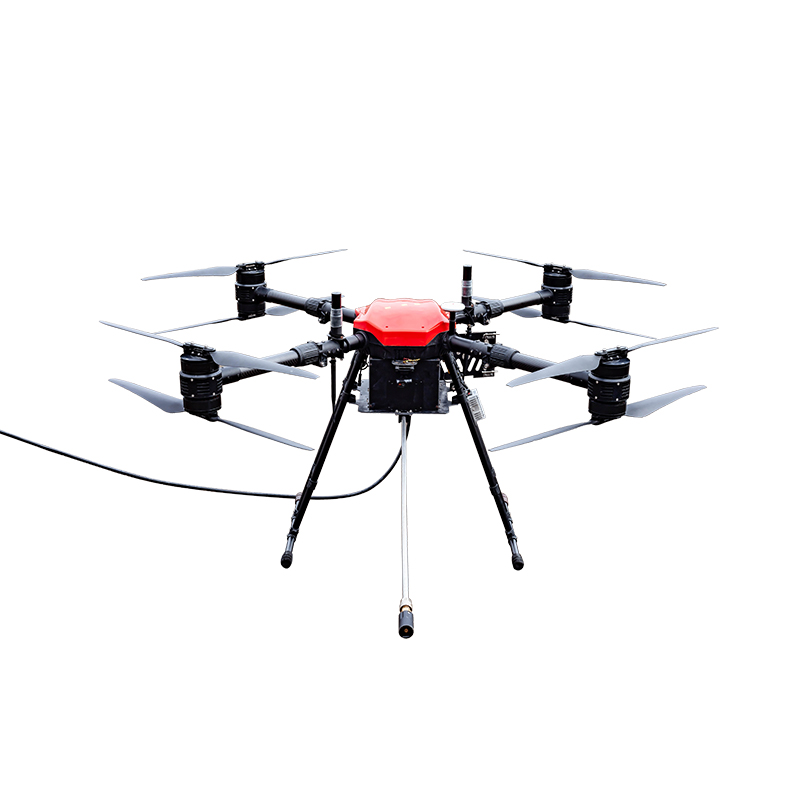
I spent time reviewing deployment cases from firms like Chengdu Xihui Municipal Planning Design and others entering this space. They didn’t start as cleaning companies. That’s telling. They came from surveying, infrastructure, engineering. They already trusted drones in rugged conditions. Cleaning was just the next logical use case.
One internal test caught my attention. Roughly 1000 square meters of façade cleaned in two and a half days—not impressive on paper until you realize the operators were still learning. Early-stage inefficiency. Once trained, that same workload compresses dramatically.
Meanwhile, a traditional boom lift crew handling 2000 square meters needed about five days and cost more per unit area. Also required partial factory shutdown. That hidden cost rarely shows up in comparisons.
Now let’s talk engineering. Because this is where most articles get lazy.
A cleaning drone is not just a flying pressure washer. It’s a balancing act between fluid dynamics, flight stability, and safety redundancy. You’ve got a high-pressure spray system (often around 10 MPa, peaking to 20 MPa), a tethered water supply or onboard tank, and a power system that cannot afford failure mid-air.
Wait, I should clarify—failure isn’t the real fear. Uncontrolled descent is.
That’s why newer systems integrate parachute deployment. Yes, an actual emergency chute. Combine that with radar-based proximity control—typically locking the drone at around 80 centimeters or more from the surface—and you start seeing a layered safety architecture instead of a single point of failure.
It’s not elegant. It’s practical.
Let’s break down a specific system: Seboar QX140-X8.
On paper, it’s a solid mid-to-high tier industrial cleaning drone. The spray flow rate hits 16 liters per minute, which aligns with what you’d expect for consistent façade washing without excessive runoff. Rated pressure sits at 10 MPa, with peaks up to 20 MPa—competitive with European systems like Aerones, which operate in similar pressure ranges but often require heavier ground rigs.
Flight endurance varies. Around 45 minutes for curtain wall cleaning. That’s actually decent considering the payload and continuous spray operation. Russian systems I’ve evaluated tend to sacrifice endurance for higher lift capacity, while European models prioritize stability and automation over raw uptime.
Speed? Max horizontal flight at 15 m/s, though in real operations you’re nowhere near that. Stability matters more than speed here. Always.
Cleaning throughput is where it gets interesting. Light cleaning reaches about 1000 square meters per hour. Deep cleaning drops to 500. That aligns almost perfectly with field data reported by Chinese operators. So no exaggeration there.
The nozzle distance range—2 to 3 meters—is slightly more conservative than some European counterparts that push closer proximity for precision cleaning. But that tradeoff reduces collision risk. I’d take that any day.
Environmental tolerance sits between -10°C and 40°C, with up to 90% humidity. That’s wide enough for most urban deployments, though high-wind limitations (12 m/s max) remain a bottleneck across all global systems. No one has solved that yet.
Charging time at 40 minutes is respectable, especially when paired with tethered power options. This hybrid approach—battery plus ground power—is where Chinese manufacturers are currently outpacing some Western designs that still rely heavily on battery swaps.
Storage footprint? Compact enough. Foldable arms reduce transport friction, which matters more than people think when scaling operations across multiple sites.
Overall, the Seboar unit doesn’t revolutionize the category. It refines it. And in engineering, refinement wins markets.
Back to the bigger picture.
There are about 2000 buildings over 100 meters tall in China alone. That’s a massive service surface. Yet drone cleaning penetration was only around 2% in 2024. Forecast? 20% by 2030.
That’s not hype. That’s early adoption curve behavior.
And the projected market size—223 billion RMB—signals something else entirely: adjacent services.
Because once you have a stable aerial platform that can clean, you can also inspect. Spray coatings. Apply sealants. Even assist in façade repairs.
Look, cleaning is just the entry point.
There’s still friction, though.
Regulation is messy. Below 120 meters, drone operations are relatively flexible. Above that, things get bureaucratic fast. Filing procedures, airspace approvals, operational restrictions—it slows deployment exactly where the tallest buildings need it most.
And standards? Not fully defined yet. Which means every company is partially inventing its own safety and operational protocols.
That’s risky. But also typical for emerging industries.
Let me be blunt.
The biggest constraint isn’t technology anymore. It’s coordination—between regulators, property owners, and service providers. The hardware works. The economics make sense. The demand is visible.
What’s missing is alignment.
One last thing.
People keep asking, “Can it really clean as well as humans?”
Short answer: yes, if configured properly.
Long answer: it depends on chemistry more than mechanics. The cleaning agent matters. The spray pattern matters. Water purity matters. Even drying conditions affect streaking. The drone is just the delivery system.
And a very efficient one at that.
So no, this isn’t some futuristic experiment.
It’s already here. Quietly replacing ropes with rotors.
And once operators stop “practicing” and start scaling, the skyline maintenance industry is going to look very different—faster, safer, and far less human.