
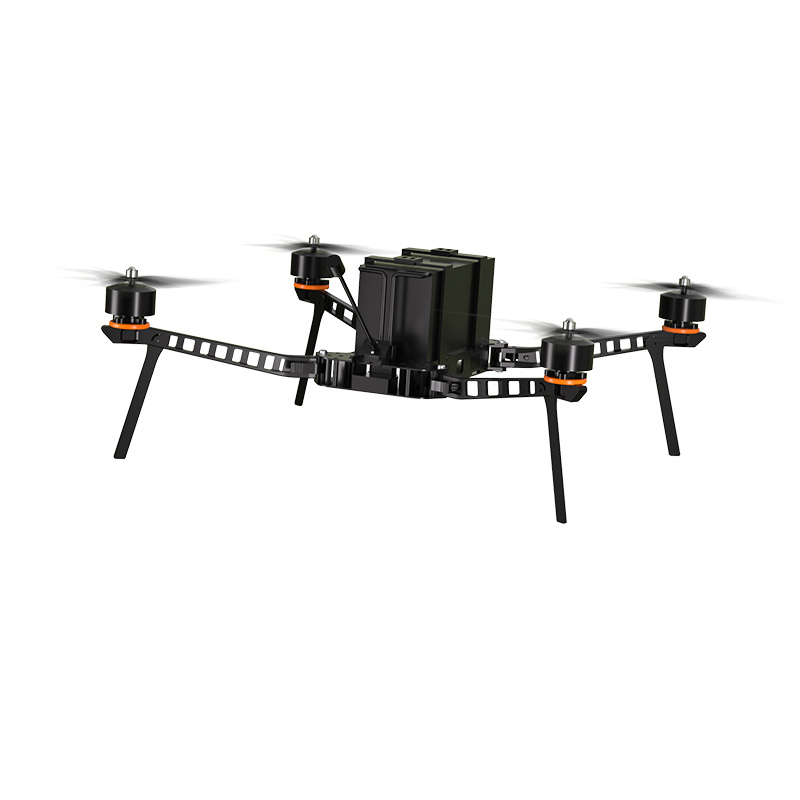
A foldable FPV drone datasheet can list a frame weight and an aircraft empty weight on the same product page. Those entries describe different specification scopes. For the ZD series, the 10-inch frame table lists Weight: 490 g, while the ZD-10 aircraft table lists Empty Weight: 2496 g. Keep both labels attached to their values. Neither entry, by itself, provides a complete account of the parts included when that assembly was weighed.
For a buyer reviewing a configuration, the useful question is therefore which assembly and weighing conditions a figure represents. Replacing the aircraft entry with the lighter frame entry would lose that distinction. Treating the aircraft entry as a confirmed takeoff mass would add a meaning the published weight row does not establish.
Start with the table heading, then read the row
The ZD aircraft and frame specification tables separate the aircraft specifications from the frame specifications. In the frame table, 490 g sits in the 10-inch column under Weight. In the aircraft table, 2496 g sits in the ZD-10 column under Empty Weight. These are first-party published specifications, rather than an independent weighing report.
That separation should survive when the data moves into a quotation or an internal comparison sheet. A field labeled simply “drone weight” would conceal which entry was copied. A clearer record keeps the product family, model or frame size, table heading, row label, and stated unit together. It also identifies the source version or retrieval date so that a later revision can be checked.
The two corresponding columns both list a wheelbase of 480 mm. That matching dimension helps identify the entries being discussed; it does not establish identical assembly contents or weighing conditions. A shared size is insufficient evidence that two mass figures can be substituted for one another.
Empty weight still needs an inclusion record
The ZD-10 table includes rows for aircraft components and a battery specification, but the Empty Weight row does not enumerate a complete weighing inclusion checklist. Reading the table therefore leaves a specific documentation question: which items were physically present for the 2496 g entry?
Ask for that answer before using the figure in a configuration review. The weighing record should identify the assembly revision, installed equipment, battery inclusion and state, any payload or accessories, and the applicable measurement conditions. These are requested clarifications, not a claim that a particular item is included or excluded in the published value.
The frame entry needs the same care within its narrower scope. Confirm the frame assembly represented by 490 g, including the supplied hardware and any items omitted from the weighing. Do not silently assume that every quoted frame kit has the same contents. A figure can remain useful while its exact inclusion boundary is still awaiting confirmation.
Subtraction does not identify the missing components
Subtracting the frame value from the aircraft value would produce a numerical difference. It would not establish a verified battery mass, electronics mass, or payload allowance. Assigning one of those labels requires evidence about the contents and conditions of both weighed assemblies.
For example, a procurement comparison may need the mass of a particular installed configuration. The two published rows do not provide a component-by-component weighing record for that configuration. Request the relevant configuration record instead of turning the difference between the rows into an undocumented component budget.
The same limit applies to a takeoff-mass entry in a project worksheet. Keep that field unresolved until its required configuration and source are identified. Do not fill it automatically with either 490 g or 2496 g. This preserves the distinction between a published specification and a value confirmed for the aircraft configuration under review.
Keep the unresolved boundary visible in the quotation
A useful quotation can carry the two published entries alongside a short clarification request. One line can retain “10-inch frame — Weight: 490 g”; another can retain “ZD-10 aircraft — Empty Weight: 2496 g.” The accompanying request should ask which assembly revision and included items each value covers, and whether there is a separate weighing record for the proposed delivered configuration.
Once that response arrives, compare it with the configuration actually being quoted. If the equipment or assembly differs, retain the published entry as source information and record the configuration-specific value separately. Avoid relabeling an earlier specification to make it fit the new configuration.
The decision boundary is straightforward: use the published rows to identify the stated frame and aircraft specifications; use a documented inclusion record to establish how those figures apply to a particular configuration. Until that record is available, battery inclusion, payload inclusion, takeoff mass, and measurement tolerance remain questions to resolve, rather than values to infer.