
The development of drones is becoming increasingly diverse: faster, smarter, and more autonomous models are emerging. Today, FPV drones are undergoing a transformation in design—which may not sound like a major breakthrough, but in fact, it is. The advent of foldable drones has significantly reduced the hassle of travel.
Let’s talk numbers first. Not the flashy ones.
A single package can now carry up to 29 tubular drone containers (Source: 「Russian folding FPV drone with smart container “Matryoshka” goes into mass production」). That’s not a spec sheet flex—it’s a supply chain argument. One shipment, 29 deployable units, each pre-configured, protected, and ready to launch. No fragile prop arms sticking out. No last-minute assembly under pressure. Just plug, heat, and go.
Here’s the thing: investors don’t get excited about folding arms. They get excited about throughput per cubic meter.
Then vs. Now: The Hidden Shift
A few years ago, foldable drones were framed as a portability gimmick. Consumer convenience. Backpack-friendly design. Maybe a nod to travel vloggers. That framing is dead. Today’s foldable FPV systems are being engineered as containerized assets, not gadgets. The Russian “Matryoshka” program—developed by Kravt with support from the Center for Unmanned Systems and Technologies—just entered mass production. That alone signals something important: this is no longer prototype territory.
And it’s not just about folding. It’s about integration density.
Sealed tubular containers now handle storage and transport as a single system. Add battery thermal management—automatic heating in cold environments—and suddenly deployment reliability jumps in places where traditional drones simply fail to start. Cold kills batteries. Always has.Now it doesn’t. Or at least, not as easily.I should clarify… it still does, but the failure window shrinks dramatically when you actively manage temperature inside the container itself.
The Real Battle: Logistics vs. Performance
Let’s bring in the comparison everyone’s quietly making. The U.S.-based Vector system, specifically the Hammer F1, sits in the same category as a reference competitor. On paper, both platforms aim at similar operational outcomes. But the differentiation isn’t speed. It’s infrastructure philosophy.Matryoshka leans heavily into: Integrated storage + deployment tubes
Centralized power distribution across multiple units
Modular communication interfaces (including fiber optic options) That last point matters more than people think.Because communication flexibility isn’t a feature—it’s risk mitigation. Swap modules, adapt to interference conditions, or go wired if needed. You’re not locked into one comms architecture. From a VC lens, that’s platform thinking. Not product thinking.
Old Constraints, New Workarounds
There’s a useful historical parallel buried in older research. Take the Prometheus drone project—designed to enter underground mines through small boreholes, then unfold and map environments humans couldn’t reach. It solved a very specific constraint: access through narrow entry points.
The limitation? Short flight time. Limited payload versatility. A single-purpose tool. Sound familiar? Foldable drones have always been about trade-offs. Compactness vs. endurance. Flexibility vs. robustness. But the difference now is systemic.
Modern foldable FPV platforms aren’t trying to do everything in one flight. They’re part of a distributed system, where quantity offsets individual limitations. Twenty-nine units in one package. That changes the math.
ROI Isn’t About the Drone
Let’s strip this down to investment logic. If you’re evaluating a foldable FPV drone supplier today, you’re not really evaluating the drone itself. You’re evaluating:
– Deployment speed per unit
– Storage efficiency per shipment
– Failure rate under environmental stress
– Reusability vs. expendability economics
And here’s the uncomfortable truth: High-performance drones that require careful handling lose to slightly less capable drones that can be thrown into a tube and forgotten until needed. That’s not engineering purity. That’s operational reality.
The Tube Is the Product
Yes, the drone matters. But increasingly, the container is the real product. Sealed tubes do three things extremely well:
– Protect the drone from environmental damage
– Standardize transport and stacking
– Enable rapid deployment without manual prep
Add centralized power supply across multiple tubes, and now you’re not just shipping drones—you’re shipping a ready-to-run system.That’s where margins start to improve.That’s where scalability appears.
Modular Comms: The Quiet Killer Feature
Let’s zoom in on one detail that most marketing materials barely explain. Modular communication interfaces. At first glance, it sounds like a checkbox feature. Swap a radio module, maybe upgrade bandwidth. But the inclusion of fiber optic connectivity options is a different category entirely.Why? Because it decouples the drone from traditional wireless constraints.
No interference. No signal jamming issues in the conventional sense. Just a physical data link. That opens doors—especially in environments where RF reliability collapses. And from an investor standpoint, that’s not just differentiation. That’s defensibility.
Market Direction: Fragmentation Over Dominance
Here’s a prediction that might age well. There won’t be a single dominant foldable FPV drone supplier. This market is fragmenting. Different use cases—industrial inspection, confined-space mapping, rapid deployment scenarios—will demand slightly different configurations of the same core idea: Foldable frame + containerized logistics + modular systems.
What companies like Kravt are doing is pushing toward system-level integration, while competitors like Vector are refining performance benchmarks. Both approaches matter. But only one scales efficiently across unpredictable environments.
The Trade-Off Nobody Wants to Admit
Foldable designs introduce mechanical complexity. Hinges fail. Locking mechanisms degrade. Structural rigidity takes a hit. These aren’t theoretical concerns—they’re engineering realities. So why push forward anyway? Because the alternative—rigid drones with external handling requirements—doesn’t scale operationally. You’re trading mechanical reliability for logistical superiority. And right now, logistics is winning.
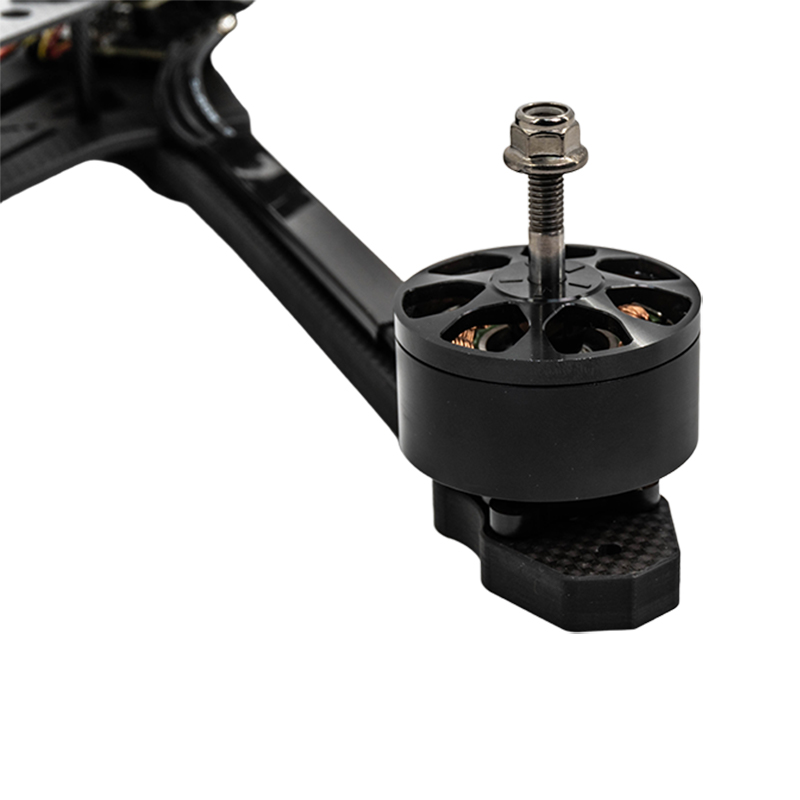
Seboar believes that the suppliers of foldable drones he has encountered today succeed not because of their impressive flight specifications, but because they genuinely understand what consumers need by putting themselves in their customers’ shoes. The current trend favors drones that are easier to store, quicker to deploy, and built to withstand harsh environments. These products don’t need flashy marketing—they simply deliver solid, practical performance—and it is precisely this kind of product that the market favors.