
Many people believe that the competition in the cleaning drone market is about who can fly more stably and clean more efficiently. But what’s truly interesting about this market is that in the future, the deciding factor may not be the drones themselves, but rather who can truly complete the entire cleaning process.
For years, people treated aerial cleaning drones like the inevitable answer to every dirty industrial surface imaginable — skyscrapers, solar farms, warehouses, bridges, even offshore infrastructure. Investors loved the pitch decks. Operators loved the demo videos. Media outlets loved the futuristic visuals.
Reality was messier. A drone spraying water onto a dusty solar panel field in a controlled demo looks impressive for about thirty seconds. Then physics enters the conversation. Battery limitations. Water payload constraints. Wind drift. Maintenance cycles. Downtime. Overspray. Pump pressure inconsistencies.
And suddenly the “perfect solution” starts looking expensive. Here’s the thing: the global market is still exploding. Just not exactly in the way many people predicted five years ago. According to the Japanese research institution Market Research Center Co., Ltd., the global photovoltaic mobile cleaning robot market reached $1.047 billion in 2025 and is projected to hit $3.482 billion by 2032, with a 19.1% CAGR from 2026 to 2032. The biggest shift? Solar O&M operations are rapidly moving toward automation and unmanned cleaning systems, while demand for drones and intelligent cleaning robots is growing simultaneously.
That last sentence matters more than people realize. “Simultaneously.” Not “drones replacing everything.” Not “robots winning.” Both. That changes the entire conversation around the best cleaning drone.
The Old Drone Industry Had a Different Obsession. Back in 2015, the drone industry was still intoxicated with endurance and military crossover technology. At the Beijing International Aviation Exhibition, major Chinese aerospace groups showcased UAV systems designed for reconnaissance, strike coordination, vertical takeoff operations, and long-duration autonomous flight.
The engineering philosophy was obvious: fly longer, carry more, survive harsher environments. Civilian applications existed, but mostly as side stories. Power inspections. Environmental monitoring. Mapping. Forestry. Cleaning? Barely discussed. Wait, I should clarify…
Industrial cleaning existed conceptually, but it wasn’t considered a serious autonomous market yet. Most operators still relied on labor crews, water-fed pole systems, suspended platforms, or massive mechanical rigs. The economics of automation simply weren’t compelling enough. That changed because solar farms became gigantic. Not slightly bigger. Gigantic.
A utility-scale photovoltaic site can now stretch across terrain that makes manual cleaning borderline absurd. Dust accumulation cuts energy yield. Water scarcity complicates maintenance schedules. Labor shortages increase operating costs. Suddenly, autonomous cleaning systems stop being “cool tech” and start becoming financial necessities.
That’s where the modern cleaning drone enters the picture — though honestly, many buyers misunderstand what they should actually optimize for. The Best Cleaning Drone Is Usually the One You Don’t Notice. Strange statement, right? But experienced operators already know this.
The most valuable industrial drone is rarely the flashy one with aggressive marketing videos and cinematic FPV footage. It’s the platform nobody talks about because it quietly finishes 400 repetitive cleaning cycles without catastrophic maintenance costs. Boring wins. A lot. Especially in solar infrastructure. The current market has split into three competing philosophies:
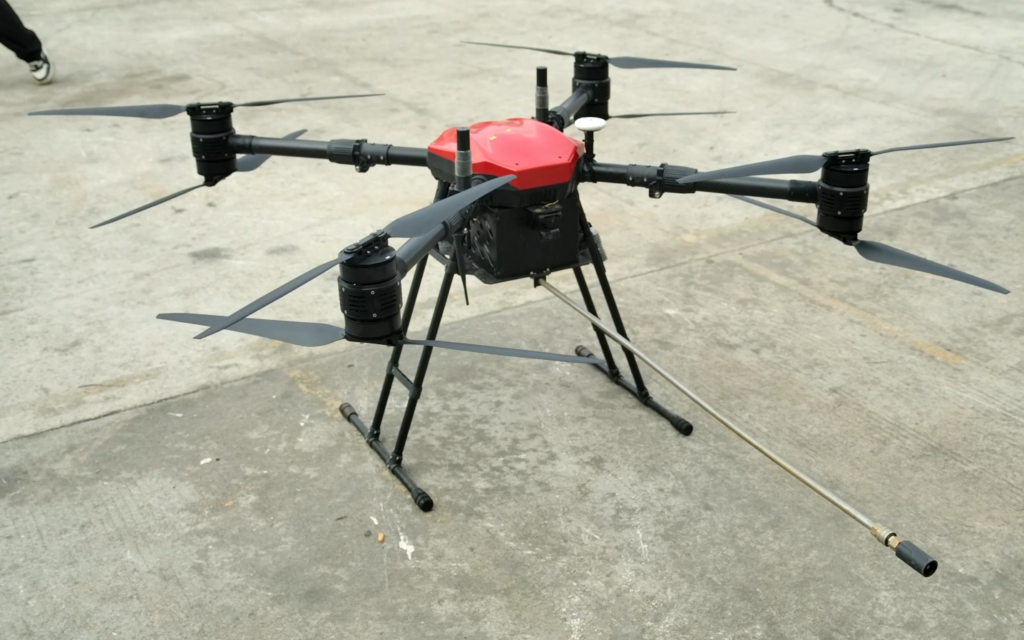
1. Fully Aerial Cleaning Drones. These systems perform direct spraying or washing while airborne. Advantages:
Fast deployment
Excellent access to difficult structures
Reduced human risk exposure
Useful for vertical surfaces and high-rise assets
Problems:
Limited payload endurance
High battery consumption
Water weight destroys flight efficiency
Wind drift reduces cleaning precision
Pump systems add failure points
And nobody likes discussing the hidden operational issue: downtime stacking.
One drone failing during a large-scale solar maintenance operation isn’t merely “one drone offline.” It interrupts logistics, battery rotation, water refill schedules, operator coordination, and inspection timing. The complexity compounds fast.
2. Ground-Based Autonomous Cleaning Robots. These are dominating large photovoltaic installations right now. Why? Simple economics. Ground robots don’t waste energy fighting gravity. They can operate longer, carry heavier cleaning systems, and maintain more consistent pressure control. Many solar operators now prioritize autonomous rail-based or panel-mounted cleaning robots because the ROI is easier to calculate. Less drama. More predictability. Honestly, investors love predictability.
3. Hybrid Drone + Robotics Ecosystems. This is probably where the industry is heading. Not because it sounds futuristic. Because it solves actual operational bottlenecks. Drones perform inspection, thermal analysis, fault mapping, and rapid-response spot cleaning. Ground robots handle repetitive bulk cleaning. AI systems coordinate maintenance schedules based on panel contamination data. That workflow makes sense.
The “best cleaning drone” in 2026 increasingly acts like an intelligent maintenance node inside a larger automated infrastructure system. Not a standalone superhero machine. Big difference. The Physics Problem Nobody Escapes
A lot of marketing content ignores this. Water is heavy. Very heavy.
Industrial cleaning drones face brutal energy trade-offs the moment serious cleaning payloads are introduced. Add larger water tanks and flight time collapses. Increase battery size and weight rises further. Increase rotor size and maintenance costs climb. There’s no magical engineering loophole here.
Every cleaning drone manufacturer is balancing the same triangle: Payload, Endurance, Stability. You can optimize two aggressively. Rarely all three. That’s why many experienced infrastructure operators now prefer drones for: Precision spot cleaning, Hazard-zone access, Inspection-assisted maintenance, Emergency cleaning scenarios, Vertical or dangerous structures.
Meanwhile, large repetitive cleaning operations increasingly migrate toward autonomous robotic systems. Counter-intuitive? Maybe. Logical? Absolutely. AI Is Quietly Becoming More Important Than Hardware. This part gets overlooked constantly. The next competitive battlefield probably won’t be propellers or spray nozzles. It’ll be operational intelligence. Imagine two cleaning fleets. One has slightly better motors.
The other predicts dust accumulation patterns, schedules cleaning cycles dynamically, reduces unnecessary water use, and minimizes downtime through predictive maintenance algorithms. The second company wins. Every time. Because industrial clients care about output stability, not cinematic drone footage.A solar farm operator does not wake up thinking: “I hope my cleaning system looks futuristic.”
They wake up thinking: “How do I maximize energy yield while lowering operational cost per megawatt?” Different mindset entirely. So… What Actually Makes the Best Cleaning Drone? Not speed. Not flashy autonomous marketing claims. Not oversized payload specs copied from trade show banners. The best cleaning drone in 2026 usually shares five characteristics:
Stable operational economics
Fast maintenance turnaround
Reliable autonomous navigation
Strong integration with inspection systems
Compatibility with broader robotic workflows
That last point matters more than most buyers expect. Because industrial automation is becoming ecosystem-driven. A cleaning drone that cannot integrate with inspection software, fleet management platforms, thermal imaging workflows, or autonomous maintenance scheduling systems may become obsolete surprisingly fast — even if the hardware itself remains excellent.
Technology evolves like that sometimes. Quietly. One year you’re buying “the best drone.” Three years later you’re buying “the most compatible infrastructure automation node.” The terminology changes because the industry changes.
Ultimately, the significance of this shift may extend far beyond drones. It’s more like a preview of the future direction of the entire industrial robotics industry.