
In the past, naval vessels primarily focused on defending against incoming anti-ship missiles. Today, however, small drones are increasingly becoming a major headache for commanders. Although they cost far less than missiles, they can still force warships to take defensive action, consume expensive intercept resources, and increase the risk of detection. For navies around the world, this is no longer a hypothetical scenario for the future, but a very real challenge they are currently facing.
Recent reports from Chinese state media revealed testing of a new terminal air-defense and missile-defense system by the Chinese Navy. According to the disclosed footage, the system was evaluated against multiple high-speed target drones flying extremely close to the sea surface under complex electromagnetic conditions. The targets were eventually intercepted by diving interceptors during simulated combat scenarios.
The official details were almost nonexistent. In fact, large portions of command-center displays were deliberately blurred. That alone tells an interesting story. When military organizations are willing to show the interception but not the sensor picture, they’re usually signaling capability while protecting the real advantage: detection, tracking, and engagement logic. And that’s where things get interesting.
The Real Challenge Isn’t Destroying Drones. It’s Finding Them. Look, shooting down an airborne target is hard. Finding a tiny airborne target above a cluttered ocean background is harder. A fast FPV-style drone approaching at low altitude creates a nightmare for shipboard defenses. The curvature of the Earth limits radar horizon. Sea clutter creates false returns. Electronic warfare can complicate tracking. Add multiple incoming targets and reaction time starts shrinking dramatically.
A decade ago, naval air-defense systems were primarily optimized around anti-ship missiles.Today’s threat picture looks different. Small unmanned aircraft are becoming faster, cheaper, more autonomous, and easier to deploy in large numbers. Some are used for reconnaissance. Others carry explosives. Some simply force defenders to waste expensive interceptors. The economics are brutal. One drone may cost hundreds or thousands of dollars. An interceptor missile may cost vastly more. That imbalance is driving a global search for new terminal-defense solutions. China isn’t alone.
Russian, European, American, and Middle Eastern defense programs have all accelerated development of close-range counter-UAS technologies over the last several years. Missiles remain part of the answer. Guns remain relevant. Electronic warfare keeps expanding. No single solution is winning. At least not yet.
The Sea-Skimming Problem Keeps Getting Worse. Most people imagine drones flying high. Wrong image. The most dangerous drones often fly low. Very low.
Some operate just meters above terrain or water surfaces specifically to reduce detection opportunities. Over open ocean, this creates a particularly difficult engagement environment because sensors must distinguish a small moving object from constantly changing wave patterns.
The reported Chinese test emphasized ultra-low-altitude high-speed targets skimming the sea surface. That’s not accidental. It’s arguably one of the most demanding target profiles available for a naval defense system short of an actual anti-ship missile. And if a defense system can reliably defeat that profile, its usefulness against many future drone threats increases significantly. A swarm of fast, low-flying drones creates entirely different engagement mathematics.
The Manufacturing Side Nobody Talks About. Here’s the thing. Every discussion about drone warfare eventually circles back to production capacity. Not technology. Production. A prototype is impressive. A factory is decisive.
The reason FPV drones have attracted so much military and industrial attention isn’t because they’re revolutionary aircraft. The underlying technology is surprisingly familiar: brushless motors, lithium batteries, flight controllers, digital video links, lightweight composite structures.
What changed was manufacturing efficiency. Modern drone producers can iterate designs rapidly, scale production, and adapt airframes for specialized missions without waiting years for traditional aerospace development cycles. That flexibility matters. Especially when operational requirements change every few months.
To understand where industrial FPV platforms fit into the broader market, it’s useful to compare a representative heavy-duty folding FPV drone against common trends seen in Russian, European, and commercial industrial systems.
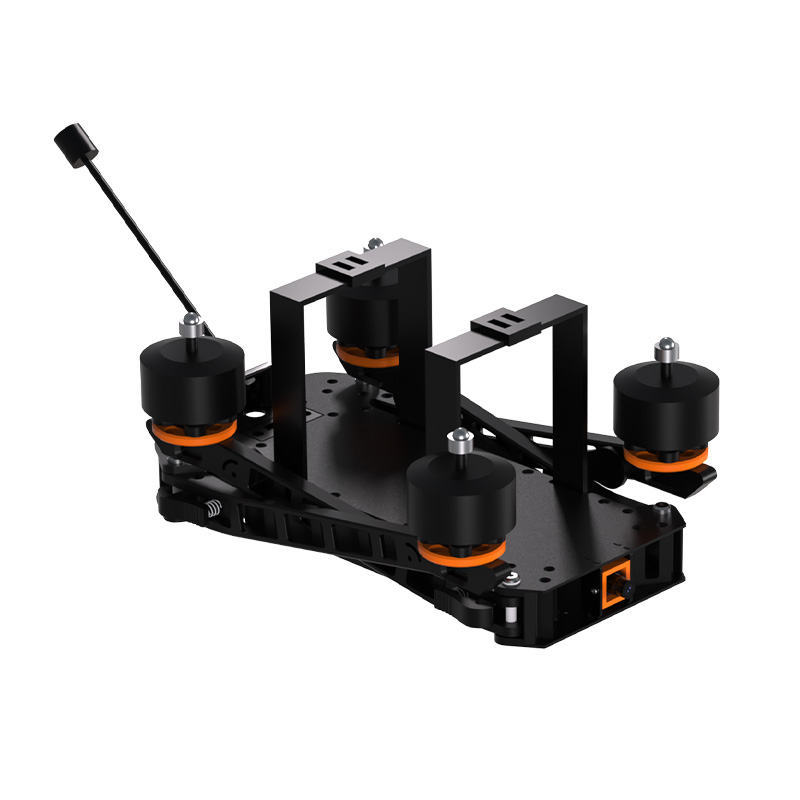
The Folding FPV Drone ZD-15 provides an interesting benchmark because it focuses on payload capacity and operational flexibility rather than pure racing performance.
ZD-15 Folding FPV Drone
– 15-inch propulsion system
– Up to 8 kg maximum payload
– Approximately 44 minutes flight endurance (ideal conditions)
– Up to 15 km control range
– Foldable aviation-grade aluminum structure
– Maximum speed up to 160 km/h
– Industrial sensor and delivery compatibility
Typical Smaller FPV Platforms
– 5–10 inch propeller configurations
– Payload generally below 3 kg
– Shorter endurance profiles
– Higher maneuverability
– Lower transportation footprint
– Optimized for tactical or recreational missions
Typical European Industrial Multirotors
– Strong sensor integration
– Excellent software ecosystems
– High reliability standards
– Often lower top speed
– Frequently higher acquisition cost
– Mission focus on inspection, mapping, and infrastructure monitoring
Russian Long-Range FPV Trends: Emphasis on affordability, Modular field modifications, Rapid production scalability, Mission-specific payload adaptation, Focus on operational practicality rather than polished industrial design.
From an engineering perspective, the ZD-15 sits somewhere between industrial logistics platforms and traditional FPV aircraft. Its most notable characteristic isn’t speed. It’s payload-to-portability balance. The foldable structure reduces transportation volume while preserving lifting capability. For operators carrying cameras, sensors, communication equipment, or specialized payloads, that tradeoff often matters more than chasing maximum velocity figures. Not glamorous. Very useful.
What Naval Defenses Are Quietly Teaching Drone Manufacturers? This might sound backward, but advances in drone interception often accelerate drone development. Every improvement in detection systems pushes aircraft designers toward lower signatures. Every improvement in interception pushes operators toward greater speed, autonomy, and maneuverability. It’s an engineering arms race. Always has been.
The reported Chinese naval testing reflects exactly that dynamic. Defenders are adapting to low-altitude, high-speed unmanned threats. Manufacturers respond by improving propulsion efficiency, reducing deployment time, increasing range, enhancing navigation resilience, and optimizing payload integration. Then defenses adapt again. The cycle repeats. Nobody gets to stop innovating.
The Bigger Signal Hidden Behind the Headlines. The headline focuses on a new naval interceptor. Fair enough. But the deeper story is the growing strategic importance of unmanned systems themselves. Nobody builds specialized defenses against irrelevant threats. When navies invest resources into defeating fast sea-skimming drones, they’re indirectly acknowledging how significant those systems have become.
Five years ago, many observers viewed FPV drones as niche platforms. Today they influence procurement decisions, defense planning, industrial manufacturing, and battlefield doctrine. That’s a remarkable shift. And it’s still early.
The next generation of drone platforms will likely fly farther, carry heavier payloads, deploy faster, and integrate more autonomy than today’s systems. At the same time, naval and ground-based defenses will become increasingly specialized in detecting and neutralizing them. Neither side is standing still.
Rather than focusing on the specific interception systems being used, it is more instructive to examine the underlying trends. An increasing number of countries are allocating resources specifically to counter new aerial threats such as drones. This indicates that the issue has moved beyond the stage of technical validation and has truly entered the realm of operational planning and equipment development. Once a military begins to build a dedicated defense system for a particular type of target, it signifies that the threat has become a real and long-term challenge.