
While everyone was still focused on the price of fiber optic transceivers, the defense industry was quietly carrying out a major overhaul to bring fiber optics back into the market. As part of this, traditional radio links have been gradually phased out without fanfare.
That’s the real story hiding behind SEDI-ATI’s February 2026 launch of its new 50 km RBOB fiber tether system for unmanned platforms. And yes, the specs are wild.
50 kilometers.
90 km/h deployment speed.
RF-jam immunity.
EMI immunity.
Real-time HD video.
Underwater capability.
This is not a slightly better drone accessory. It’s a signal that parts of modern warfare are moving backward to move forward. Because wireless communication suddenly isn’t trustworthy anymore.
For years, the drone industry sold a fantasy: smarter radios, stronger encryption, longer-range antennas, more autonomous networking. Endless RF optimization. Then electronic warfare escalated. Now entire battlefields look like giant microwave ovens filled with spoofing systems, signal blockers, GPS denial bubbles, and spectrum monitoring tools. A cheap jammer can ruin a million-dollar platform’s day.
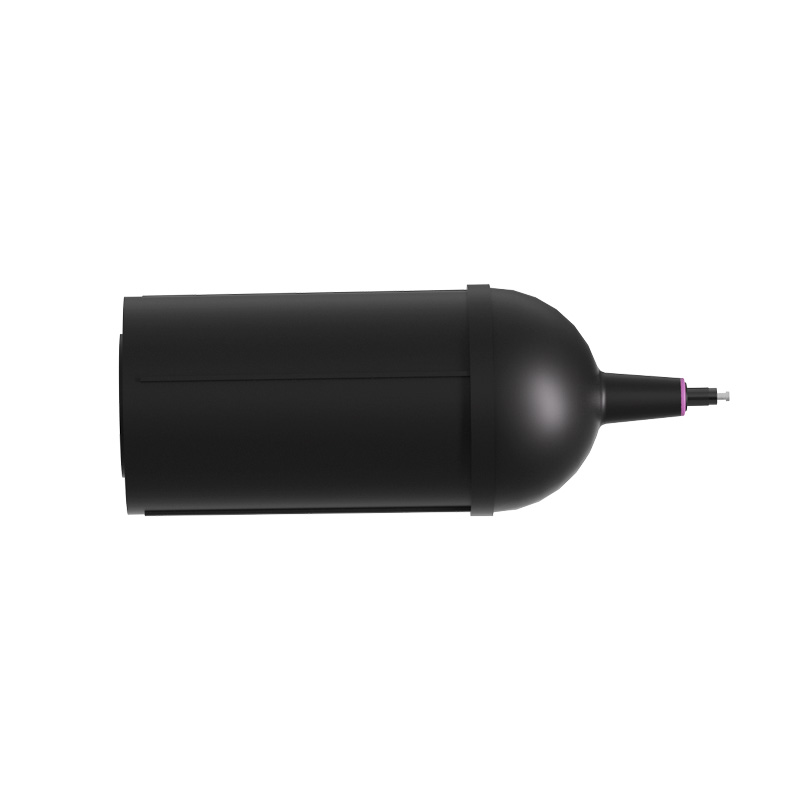
Look, fiber doesn’t care. You can jam radio waves. You cannot jam a physical strand of glass trailing behind a drone. That changes everything. The new RBOB series from SEDI-ATI wasn’t built for trade-show demos or glossy marketing decks. It was designed for ugly environments: dense forests, underwater operations, high-interference zones, and areas where RF emissions can get you detected or destroyed. That’s a very different design philosophy from the commercial drone market. And honestly? It’s about time.
Fiber Optic Transceiver Price Is Becoming a Misleading Metric. People searching “fiber optic transceiver price” usually imagine telecom hardware catalogs. SFP modules. Data centers. Enterprise networking gear. Commodity optics. Wrong battlefield.
In military unmanned systems, the transceiver itself is becoming secondary to survivability. A cheap RF system that dies in a jammed environment is suddenly more expensive than a premium optical link that actually works. Wait, that’s not entirely right… It’s worse than that.
A compromised RF signal doesn’t just fail. It exposes position data, command traffic, and operational patterns. In electronic warfare zones, emissions themselves become targets. That’s why the anti-jamming angle matters more than the optical hardware price tag. The RBOB system supports:
UAVs
UGVs
UUVs
HAUV platforms
That breadth is important. Fiber-tethered communication is no longer a niche engineering experiment. Multiple unmanned domains are converging toward the same conclusion: invisible communications beat convenient communications. And fiber is very, very invisible electronically. Disposable Fiber Systems Sound Wasteful. They’re Not.
One of the strangest details in the announcement is the “non-recoverable” spool design. At first glance, it sounds ridiculous. Why deploy kilometers of single-mode fiber only to abandon it afterward? Because battlefield math is brutal. Recoverability adds:
mechanical complexity
tension systems
retrieval motors
spool management
failure points
extra weight
All of those hurt reliability. So SEDI-ATI chose a different approach: disposable deployment combined with rapid field re-splicing capability. That’s not consumer-market thinking. That’s military pragmatism. The fiber becomes ammunition.
People outside defense tech underestimate how important this shift is. Modern unmanned systems increasingly prioritize mission completion over hardware preservation. The drone world used to worship reusable platforms. Now many systems are drifting toward expendable economics. Fiber tethering fits that logic perfectly.
Here’s where the announcement gets genuinely interesting. The spool weighs:
6.3 kg in air
only 1.7 kg in seawater
That second number matters enormously for underwater operations.A traditional RF system underwater is basically a compromise factory. Water destroys radio performance. Acoustic systems are slow and bandwidth-limited. Optical tethering bypasses much of that mess. So suddenly, a compact 220 mm diameter spool can deliver:
real-time bidirectional communication
HD video transmission
high-volume data transfer
underwater operational continuity
Over distances up to 50 km. That’s not incremental improvement. That’s architecture-level change. Especially for autonomous underwater vehicles. Most people discussing drone connectivity are still stuck arguing about 5G modules and satellite latency while fiber-tethered systems quietly solve problems RF never handled well in the first place.
Another overlooked detail: SEDI-ATI became part of Fiber Optics Group in 2023. That merger matters more than the average tech article admits. Because this is how specialized military supply chains evolve now:
legacy optics expertise
precision manufacturing
tactical integration
unmanned systems engineering
…all collapsing into vertically integrated ecosystems. And the historical lineage is fascinating.ATI Optique dates back to 1951. SEDI Fibres Optiques started in 1972. SEDI-ATI itself was founded in 2012.
This isn’t a startup hype cycle. It’s decades of optics expertise being redirected into modern autonomous warfare. Different energy entirely. Here’s the Part Most Analysts Still Miss. Fiber-tethered drones sound limiting because people imagine physical cables restricting movement. But modern combat increasingly restricts RF movement anyway. That’s the paradox. Wireless systems look flexible on paper until:
GPS disappears
spectrum gets saturated
spoofing begins
jamming ramps up
emissions tracking activates
Suddenly, the “wireless advantage” collapses. Meanwhile, a tethered optical platform keeps transmitting clean HD video through complete RF chaos. That tradeoff is becoming attractive faster than many expected. Especially for:
reconnaissance
tunnel operations
urban combat
subterranean missions
underwater navigation
perimeter surveillance
There’s also a psychological factor nobody talks about enough. Commanders trust hard connections. Always have. A physical line feels deterministic in a way wireless systems never fully achieve. In high-risk missions, certainty becomes addictive.
This is where the keyword “fiber optic transceiver price” becomes dangerously simplistic. Defense optical systems won’t follow consumer networking economics. Why? Because survivability pricing changes everything. A data-center transceiver competes on:
bandwidth
efficiency
thermal performance
compatibility
cost reduction
A battlefield optical link competes on:
jam resistance
operational secrecy
durability
deployment speed
survivability under electronic attack
Completely different incentives. Which means these systems may remain expensive — and still be considered cheap relative to mission value. That’s the uncomfortable truth. The market isn’t optimizing for affordability anymore. It’s optimizing for communication certainty in environments where certainty barely exists.
Funny, isn’t it? The future of advanced autonomous warfare may depend partly on dragging thin strands of glass behind robots. Not AI swarms. Not magical mesh networks. Not unstoppable satellite constellations.
Although glass is based on a very ancient physical principle, modern society cannot function without it. The RBOB satellite launched by SEDI-ATI in February 2026 demonstrates that the industry has begun to recognize that when radio waves gradually fade into the background, intelligent communication systems unexpectedly take on a physical form.