
You’d expect a cutting-edge drone to get cheaper over time. Fiber optic drones are doing the opposite.
That’s the puzzle.
And it’s not just a pricing anomaly—it’s a signal. A messy, battlefield-forged signal about where drone economics break, reset, and quietly rebuild around constraints most people ignore.
Let’s talk about fiber optic drone cost—not as a number, but as a system.
The uncomfortable baseline: cheap drones stopped being effective
A few years ago, the math was brutally simple.
Spend $500. Kill a tank.
That wasn’t theoretical—it was operational reality. On the Russia–Ukraine front, FPV drones became the most efficient cost-to-damage weapon class in modern warfare. But that equation degraded fast. By 2024, disabling the same armored target required 5–6 drones instead of 2–3.
That’s not inflation. That’s countermeasure maturity.
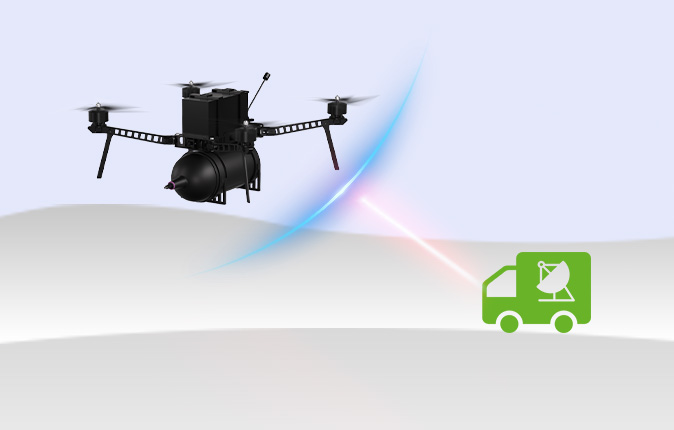
Electronic warfare stepped in. Hard.
Systems like Krasukha-style jammers could disrupt drone command links across tens of kilometers (up to ~35 km), effectively turning cheap FPV drones into disposable noise. Even with frequency hopping and shorter control distances, success rates dropped to around 30% per sortie.
Here’s the thing: once your success rate collapses, your real cost isn’t $500 anymore. It’s $500 divided by probability of success.
Do the math. It gets ugly.
Enter fiber optic drones: expensive, but brutally reliable
Fiber optic drones didn’t emerge because they were elegant. They emerged because everything else was failing.
Instead of radio control, these drones drag a physical cable—sometimes kilometers long—back to the operator. No signal. No jamming. No spoofing.
Just physics.
That changes the entire cost equation.
No electromagnetic interference vulnerability
Near-zero signal interception risk
Real-time, high-bandwidth video (theoretical fiber bandwidth hits 100 Tbps)
Wait, I should clarify—100 Tbps is theoretical fiber capacity, not what these drones actually use. But even a fraction of that dwarfs RF links.
In urban combat scenarios, operators can stream high-definition imagery of building interiors and identify targets in ~3 seconds using AI-assisted classification.
That’s not just better vision. That’s compressed decision time.
And in war—or frankly, in any high-stakes system—time is cost.
So why are they 6–8× more expensive?
Let’s break down fiber optic drone cost structure beyond the obvious.
The raw fact:
A single fiber optic drone system (with ~10 km spool) costs 6 to 8 times more than a standard FPV drone.
But the cost drivers aren’t where most people think.
1. The cable is not “just a cable”
You’re deploying kilometers of ultra-thin, high-tensile fiber that must:
Unspool smoothly mid-flight
Resist tension, bending, and environmental damage
Maintain signal integrity under motion
Advanced variants are pushing 0.2 mm diameter fibers with 3× increased tensile strength.
That’s not commodity telecom fiber anymore. That’s specialized hardware.
2. Airframe redesign is mandatory
Dragging a cable changes flight dynamics.
Larger frames
Higher-capacity batteries
Stronger motors (more noise, more heat)
You’re not modifying an FPV drone—you’re rebuilding it.
3. Payload trade-offs
Cable weight eats into payload.
So you either:
Reduce explosive/mission payload
Or scale up the drone (which raises cost again)
There’s no free lunch here.
ROI isn’t about unit price—it’s about mission success
This is where most analyses fall apart.
They compare:
$500 FPV drone vs $3,000–$4,000 fiber optic drone
And conclude: “too expensive.”
That’s naive.
Because in a contested electromagnetic environment, your real comparison looks like:
5–6 jammed FPV drones (low success probability) vs 1 fiber optic drone (high success probability)
Now layer in logistics.
In high-intensity combat zones like Bakhmut, reports indicate daily losses of 5–6 fiber optic drones under dense fire, creating serious resupply strain.
But here’s the catch: even cheap drones fail supply chains if they fail missions.
A failed strike has downstream costs:
More drones deployed
More operator exposure
More time lost
That compounds fast.
The hidden costs nobody talks about
Fiber optic drones solve one problem and introduce five new ones.
Cable fragility
Snagged on trees → drone loss
Cut by debris or glass → instant failure
Cold weather brittleness (mission success dropping to ~20% at -20°C)
That’s not edge-case failure. That’s environmental sensitivity baked into the system.
Battlefield visibility
Ironically, the cable can betray you.
There are cases where adversaries traced the fiber line back to the control station and destroyed it via artillery.
So you gain signal invisibility… and risk physical exposure.
Acoustic signature
Heavier propulsion = louder drones.
And modern battlefields use:
Acoustic sensor arrays
Mobile radar
Visual tracking
So while you’re invisible electronically, you’re louder physically.
Trade-offs. Everywhere.
Range is still a ceiling
Most fiber optic drones operate within 2–20 km, depending on cable length.
Some advanced systems push further—reports suggest up to 30–40 km in optimized deployments.
But every extra kilometer adds:
Weight
Cost
Failure risk
Scaling range is not linear. It’s exponential pain.
The market signal: hybrid systems are inevitable
Pure fiber optic drones won’t dominate.
Pure RF drones already hit a ceiling.
So the interesting development is hybridization.
Fiber + RF dual-mode switching
Use cable in high-jamming zones
Switch to wireless in safer airspace
This isn’t theory—both sides are already experimenting with it.
From a VC lens, that’s where the real opportunity sits.
Not in making fiber drones cheaper.
But in making adaptable communication stacks that optimize cost per mission dynamically.
Final thought: cost is becoming situational, not absolute
Here’s the counter-intuitive part.
Fiber optic drones are expensive.
And yet—they can be the cheaper option.
Because the metric has shifted from:
“cost per unit” to: “cost per successful effect under adversarial conditions”
And once you think that way, the entire drone market reshapes itself.
Cheap drones dominate uncontested airspace.
Fiber drones dominate denied environments.
Hybrid systems blur the line.
The battlefield figured this out first. Markets usually follow.
Slowly. Then all at once.