
Here’s the uncomfortable truth: most “cargo drones for sale” are engineered for brochures, not for logistics.
That sounds harsh. It’s also accurate.
Because once you step outside controlled demos—no wind, flat terrain, predictable payloads—the problem changes shape. Fast. What looks like a payload problem becomes a stability problem. What looks like a range problem becomes a thermal management problem. And what looks like a “bigger drone solves it” assumption… usually doesn’t.
I’ve seen teams chase payload numbers the way overclockers chase benchmark scores. It rarely ends well.The old framework—represented by systems like the MAX320 described in that earlier Chinese release—takes a very specific stance: solve everything through scale, integration, and system completeness. Foldable arms. Dedicated transport logistics. Integrated cloud command. A deeply unified operational stack.
It’s not wrong.But it’s also not universal.
It’s optimized for scenarios where you control the entire operational environment: fleet, logistics chain, trained operators, backend systems. Think government-scale deployments, large emergency response units, or forestry management networks where infrastructure already exists.
Now shift context.
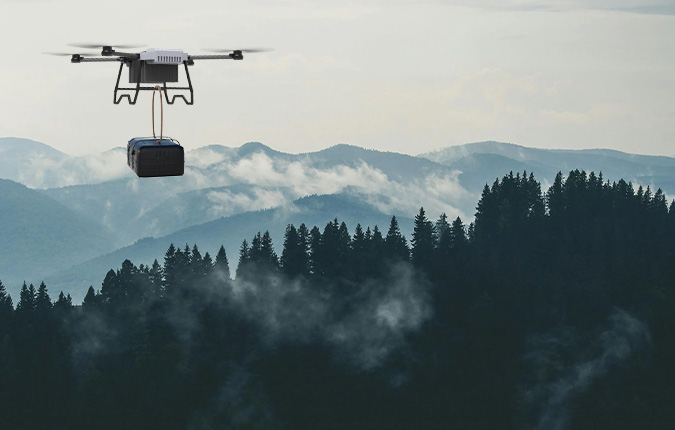
A mining contractor in a remote region doesn’t have that luxury. Neither does a mid-sized industrial operator trying to move equipment between sites without building an entire drone command ecosystem from scratch.
That’s where things get interesting.
Let’s talk about the tradeoff we ran into when developing something like the MRT30.
We had a choice: push payload higher, or keep the system deployable.
Sounds simple. It isn’t.
Because payload doesn’t scale linearly with usefulness. A 320 kg payload platform like the MAX320 is undeniably powerful—but it introduces cascading constraints: transport requirements, deployment complexity, regulatory friction, and frankly, operational inertia.
You don’t just “use” a system like that. You plan around it.So we went the other direction.
The MRT30 caps out at 30 kg payload. On paper, that sounds modest. In practice, it hits a strange sweet spot where logistics friction drops dramatically.
No special transport vehicles. No oversized ground crew. No multi-hour setup cycles.
You carry it. You deploy it. You fly.
Look, stability is the real game.
Payload capacity gets attention, but stability under load is what determines whether a drone is usable or theoretical.
This is where structural decisions matter more than raw specs.
A 1495 mm wheelbase doesn’t sound flashy. But in flight dynamics, that spacing directly affects moment arm distribution, rotor interference, and control authority under asymmetric loads. Especially when you’re carrying awkward payloads—not perfectly balanced boxes, but tools, hoses, field equipment.
And yes, those happen all the time.We learned quickly that increasing payload without widening the stability envelope just creates a more expensive failure mode.
So instead of chasing maximum lift, we optimized for controlled lift.Speed is another misunderstood variable.People assume faster is better. Not always.At 3–10 m/s, the MRT30 sits in a range that feels conservative until you consider mission profiles. Industrial cargo delivery isn’t about racing—it’s about predictable, repeatable transport cycles.
You want consistent energy consumption. Stable control loops. Minimal oscillation under load.Push speed too high, and you start fighting your own system: more corrections, more power draw, more thermal stress. The drone becomes harder to manage, not more efficient.
This is one of those quiet engineering truths that never makes it into marketing copy.The old text also emphasizes ecosystem integration—cloud platforms, multi-drone coordination, real-time data feedback.That’s powerful. No argument.But it comes at a cost: dependency.
When your drone system relies on a centralized platform for coordination, you inherit all the constraints of that platform—latency, connectivity, system compatibility, operational overhead.
We made a deliberate decision to keep the MRT30 more self-contained.
Not because cloud integration isn’t valuable, but because many real-world deployments don’t have reliable infrastructure. Remote inspection sites. Agricultural logistics. Emergency scenarios where networks are degraded or nonexistent.
In those environments, autonomy isn’t about AI—it’s about independence.There’s also the matter of weight.An empty weight of 23.6 kg (about 32.7 kg with battery) sounds like a spec sheet detail, but it defines everything from transport to regulatory classification.
Heavier drones trigger stricter compliance frameworks in many regions. They demand more robust launch conditions. They increase risk during failure scenarios.
So again, it’s a balance.Light enough to deploy easily. Heavy enough to remain stable under load.That balance is harder to achieve than it looks.
One thing the MAX320 approach gets absolutely right is deployment efficiency through mechanical innovation—foldable arms, transport optimization, integrated support systems.We explored similar ideas early on.And then we hit a wall.
Every folding mechanism introduces tolerance issues. Every hinge is a potential failure point under repeated stress cycles. When you’re dealing with industrial payloads, those tolerances matter more than convenience.So we scaled back.Not eliminated—but simplified.Fewer moving parts. More structural rigidity. Slightly slower deployment, but significantly higher long-term reliability.That was a conscious trade.
There’s a broader point here.The phrase “cargo drones for sale” hides an uncomfortable reality: there is no single “best” cargo drone. Only context-specific solutions.High-payload systems dominate in centralized, large-scale operations.Mid-payload platforms like the MRT30 thrive in distributed, flexible deployments.
And lightweight systems handle last-meter precision tasks.Different tools. Different assumptions.I keep coming back to one question: what actually breaks first in the field?
It’s rarely the motor.
It’s rarely the battery.
It’s usually the operational model.
Too complex. Too dependent. Too rigid.
That’s why we leaned toward something that doesn’t try to solve everything at once.
A 30 kg payload is enough for most real-world tasks: equipment transport, emergency supplies, inspection support. Beyond that, the marginal utility drops unless your entire operation is built around high-capacity aerial logistics.Most aren’t.
There’s a quiet shift happening in this space.Not toward bigger drones. Toward more adaptable ones.Not toward maximum capability. Toward usable capability.
And maybe that’s the real counter-intuitive conclusion here: the most effective cargo drone isn’t the one that can carry the most—it’s the one that actually gets used.
Repeatedly. Reliably. Without friction.Everything else is just engineering theater.