
Optical transceivers are not typically the most expensive components in a communication system and are often overlooked. However, for industrial and defense applications that rely on stable data transmission, their importance far outweighs their cost.
People love discussing processors, radios, antennas, and software. The humble optical transceiver rarely gets the spotlight. That may be changing.Recent developments in fiber-linked unmanned systems have pushed optical communication hardware into environments far beyond telecom racks and data centers. What used to be a networking component is increasingly becoming a battlefield component. And that changes how we should think about optical transceiver price.
The Old View: Price Per Module. For years, buyers evaluated optical transceivers using a fairly simple formula: Data rate、Distance、Connector type、Vendor compatibility、Unit price. The goal was straightforward: move data from Point A to Point B at the lowest practical cost.
Back in the mid-2010s, much of the UAV industry discussion focused on platform growth, applications, and ecosystem expansion. Industry publications highlighted emerging use cases ranging from agriculture and surveying to security, logistics, and infrastructure inspection. The communication link itself was often treated as a supporting subsystem rather than a primary differentiator. That assumption no longer holds. A communication link is now a survivability feature.
Why Fiber Suddenly Matters Again. Wireless communication dominated modern drone operations because it offered flexibility. No cables. No physical tether. No deployment constraints. Sounds ideal. Until electronic warfare enters the picture.
According to recent reporting published on May 28, 2026, fiber-connected drones are rapidly gaining attention because they remain operational in heavily contested electromagnetic environments where traditional wireless links struggle. The reported failure rate for conventional drones operating in strong electromagnetic interference environments can reach between 75% and 90%. That number is difficult to ignore.
A network engineer looking at optical transceiver price today may not immediately see the connection. A defense procurement officer absolutely does. Because communication reliability now has a direct operational value.
The Latency Advantage Nobody Talks About. Bandwidth gets all the marketing. Latency wins real-world battles. Fiber-based communication systems reportedly achieve transmission delays below 1 millisecond. Think about that for a moment. An operator controlling a fast-moving platform receives near-instant feedback while maintaining high-quality video transmission. The same reports indicate support for 4K video return feeds through fiber links.
That’s not merely about image quality. Higher-quality imagery means: Better identification、Better navigation、Better decision-making、Reduced operational uncertainty. Which raises an uncomfortable question. If a slightly more expensive optical transceiver provides dramatically better signal integrity, is it actually more expensive? Or is it cheaper? The answer depends on what failure costs.
The Weight Problem. Now for the catch. There is always a catch. Fiber communication sounds almost magical until physics arrives. Reported fiber diameters typically range between 0.2 mm and 0.5 mm. Tiny. Almost invisible. Yet a 10 km fiber spool can weigh approximately 2 kg. That’s significant.
In some systems, the fiber itself may account for more than 35% of the available payload capacity. This is where optical transceiver pricing discussions often become misleading. A buyer may spend weeks negotiating a few dollars off a module price while ignoring the engineering trade-offs created by the fiber infrastructure attached to it. Wait, I should clarify.
The transceiver is only one piece of the optical chain. Weight, durability, connector reliability, spool design, and deployment mechanics frequently influence total system economics more than the transceiver alone.
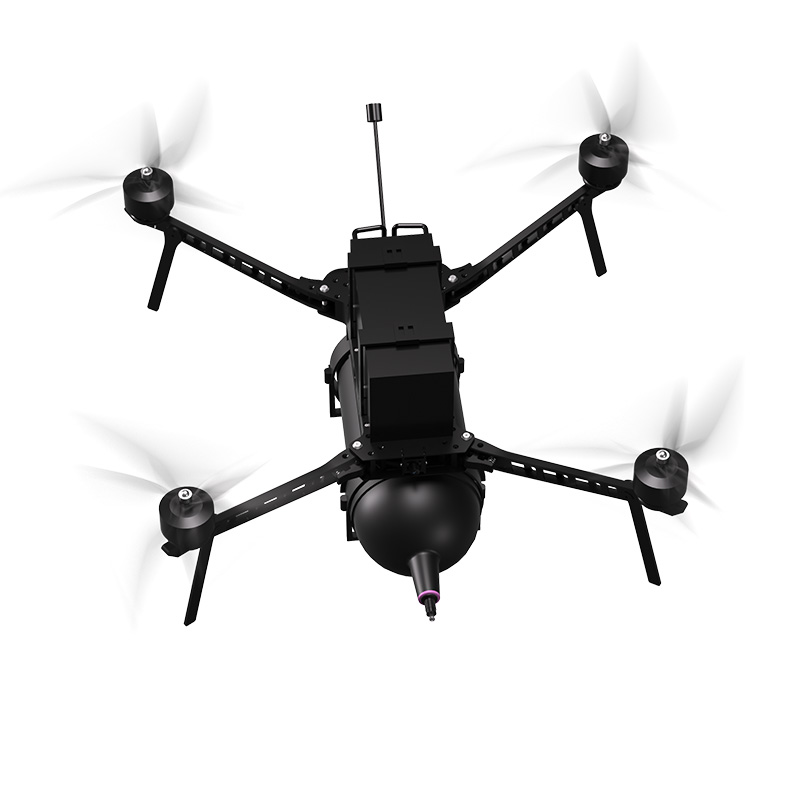
Real-World Deployment Is Accelerating. The technology is no longer experimental. Recent reports indicate that Russia began operational deployment of KVN-series fiber FPV drones in August 2024, using them for reconnaissance and armored-target engagement missions. Development has progressed rapidly. Reported systems have expanded from typical operational ranges of 10–20 km to approximately 50 km in newer configurations. At the same time: Ukraine is accelerating development programs. Israel is pursuing survivability improvements. The United Kingdom has launched efforts seeking detection and countermeasure technologies for fiber-linked drones through defense innovation channels. The pattern is obvious.
Whenever one side improves communication resilience, another side invests in defeating it. That cycle tends to increase demand for more capable optical hardware. Including transceivers.
Why Optical Transceiver Prices Don’t Follow Consumer Electronics Logic. Consumers often expect technology prices to fall forever. Networking doesn’t always work that way. Especially not specialized networking.
Three forces influence optical transceiver pricing:
1. Reliability Requirements
A data-center environment is controlled. A harsh field environment is not. Temperature swings, vibration, shock loading, contamination, and connector wear all increase qualification requirements. Qualification costs money.
2. Performance Margins
Many buyers purchase to specification. Experienced engineers purchase to margin. There’s a difference. A module operating comfortably below its maximum limits generally produces fewer surprises than one operating permanently at the edge of its envelope. Surprises are expensive.
3. Supply Chain Complexity
Certain optical components depend on precision manufacturing, specialty materials, and limited supplier ecosystems. A tiny disruption can ripple through pricing. We’ve seen this repeatedly across technology industries. The Rise of Hybrid Architectures. Perhaps the most interesting development isn’t fiber itself. It’s the move toward dual-mode systems.
Recent reports suggest multiple countries are investing in architectures that combine fiber communication and traditional radio links, allowing operators to switch depending on operational conditions. That approach feels practical. Wireless when flexibility matters. Fiber when survivability matters.
The result is not a replacement of existing communication systems. It’s a layered communications strategy. And layered systems usually require more optical components, not fewer.
What Buyers Should Actually Ask. When evaluating optical transceiver price, the wrong question is: “What’s the cheapest module available?” The better questions are: What failure rate can this communication link tolerate? What environment will it operate in? What maintenance burden does it create?What bandwidth margin exists? What latency requirements matter? What is the cost of downtime?
Those answers often change the purchasing decision completely. Here’s the thing. The market increasingly rewards communication resilience rather than communication capability alone. A decade ago, higher bandwidth was the selling point. Today, staying connected under difficult conditions may be worth far more.
The latest developments in fiber-linked systems demonstrate exactly that. As operational environments become more hostile to conventional radio communication, optical links—and the transceivers that power them—shift from commodity components to strategic assets.
In the future, users may focus not just on the purchase price of a single optical transceiver, but on the actual value it can generate over the entire mission lifecycle.