
Nobody wants to hear this. But the endless “best thermal drone” listicles polluting your search results in 2026 are selling you a category that doesn’t function the way you think it does.
Here’s the thing: thermal drones are not magic. They don’t give you X-ray vision, they don’t make you a better inspector overnight, and — this one stings — owning an infrared camera that can see at night won’t change night flying rules one bit. Digital Camera World Read that again. The camera sees in the dark. The law doesn’t care.
That gap between capability and legality is where most buyers live in blissful, expensive ignorance.
The Weight Problem Nobody Talks About
Every single thermal drone on the market today — every one — exceeds 250 grams. That’s not a coincidence. Thermal sensors, radiometric processors, dual-camera gimbals: physics has a minimum weight requirement, and the FAA has a registration requirement for anything above that threshold. Modern thermal drones range from compact platforms under $5,000 to enterprise systems exceeding $30,000. DroneBundle Across that entire price spectrum, you’re registering your aircraft. Non-negotiable. Anyone who tells you otherwise is either lying or selling something.
The registration isn’t the problem. The problem is that buyers conflate regulatory compliance with operational freedom. They’re not the same thing.
Radiometric Is Table Stakes Now. Stop Celebrating It.
Construction work requires drones equipped with radiometric thermal sensors that provide actual temperature data, not just thermal imagery. The Drone U Correct. And in 2026, virtually every commercial thermal drone ships with radiometric capability baked in. This is no longer a differentiating feature. It’s the floor.
Five years ago, radiometric data was a premium selling point. Today, treating it as a competitive advantage in a spec sheet is like bragging that a laptop has Wi-Fi. The Skydio X10 integrates a Teledyne FLIR Boson+ sensor with 640×512 thermal resolution combined with radiometry and advanced automatic gain control, enabling clearer thermal images. Skydio Great. So does the competition. The sensor wars have produced genuine commoditization at the spec level.
What hasn’t commoditized? Optical zoom. And the industry is embarrassingly slow to admit this.
Zoom Is the Real Story
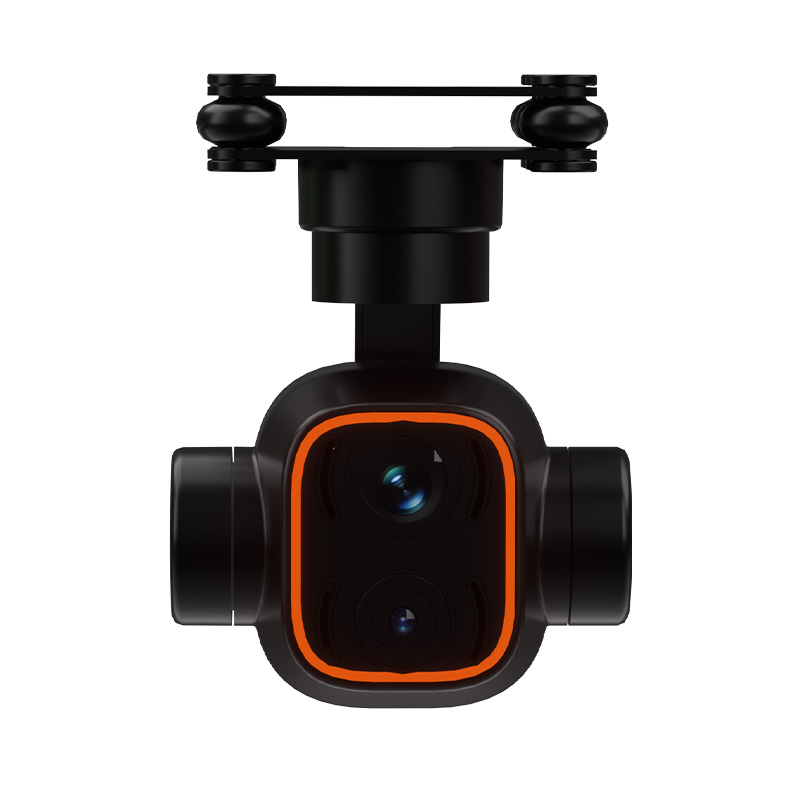
Talk to anyone who actually uses thermal drones for power line inspection, wildfire perimeter mapping, or structural assessment. They’ll tell you that long optical zoom — not thermal resolution — is what determines whether the data is usable. The payload flexibility of the Matrice means it can carry a 16x optical and 200x digital zoom camera alongside a high-res thermal camera and a laser range finder. Digital Camera World
That 16x optical zoom is the difference between identifying a failing electrical connection on a transmission tower and getting a pretty heat blob.
(Wait — I should clarify. Digital zoom is largely marketing. Optical zoom is the metric that matters. 200x digital sounds impressive at a trade show and means almost nothing in the field.)
The Autel EVO Max 4T XE packs a four-camera system, including a 10x optical zoom camera with a maximum hybrid zoom of 160x. The Drone U That’s a meaningful optical zoom number on a platform that also carries a thermal sensor. This is the design philosophy the industry needed to standardize on years ago.
DJI’s Shadow Over Everything
You cannot write about thermal drones in 2026 without confronting the DJI situation. If you can’t buy a DJI drone in 2026, what should you get? Digital Camera World — that’s a real question being asked right now, and it represents a genuine fracture in the market.
The U.S. government and Department of Defense have effectively created a parallel drone economy. The “Blue List” of approved vendors exists specifically to route procurement away from DJI’s hardware. For teams that need secure thermal imaging in a compact platform, the Parrot Anafi USA stands out — it is lightweight, easy to deploy, and NDAA-compliant. The Drone U NDAA compliance is now a purchase criterion that didn’t exist five years ago.
Here’s what nobody says plainly: the models everyone currently recommends — DJI Matrice 30T, DJI Matrice 4T, the original EVO Max 4T — were all designed and released before the most aggressive wave of U.S. restrictions landed. Buyers can still acquire them through consumer channels. But enterprise procurement teams, government agencies, and public safety departments are operating in a fundamentally different purchasing environment. The “best thermal drone” genuinely depends on which side of that regulatory divide you’re on.
The Democratization Story Is Real, But Incomplete
Thermal imaging technology has gone from being the preserve of the military to just another day-to-day tool — as useful for building inspectors and insulation engineers as for search-and-rescue. Digital Camera World
This is true. It’s also only half the picture.
Democratization of hardware without democratization of expertise produces expensive paperweights. Professional thermal imaging requires understanding both drone operation and thermography principles to deliver accurate, actionable results. The Drone U The sensor doesn’t interpret the data. You do. A $15,000 thermal drone in the hands of someone who can’t distinguish emissivity variation from an actual temperature anomaly is a net loss.
Thermal drones have transformed how professionals detect problems that remain invisible to standard cameras — identifying a failing electrical connection, locating a missing person in darkness, or finding water damage hidden behind walls. DroneBundle The operative word is professionals. The barrier to competent use hasn’t dropped as fast as the barrier to purchase.
So What’s Actually the Best Thermal Drone?
Look, it depends. Genuinely. For hobbyists or those on a budget, the Autel EVO II Dual 640T V3 delivers true 640×512 thermal imaging at lower cost. For advanced professional use, the DJI Matrice 4T and Autel EVO Max 4T XE offer longer flight times, reliable thermal sensors, and tools designed for enterprise missions. The Drone U
For government and defense-adjacent work, NDAA compliance narrows the field fast. For pure commercial inspection work with no procurement restrictions, DJI’s ecosystem remains formidably deep.
The honest answer is that the “best” thermal drone is the one that matches your regulatory context, your optical zoom requirements, your budget ceiling, and — critically — your ability to actually interpret what the sensor is telling you.
The hardware is the easy part. It always was.