
Currently, many people have a major misconception about cargo drones; they believe they are simply smaller versions of the delivery drones that drop off packages at suburban homes. People are paying a heavy price for their own cognitive biases.
While media attention keeps circling around consumer drone experiments, a different segment of the industry has been solving a much harder problem: moving hundreds of kilograms of cargo into places where roads are slow, damaged, nonexistent, or simply impractical. And the gap between what cargo drone companies can do today versus what most people think they can do is surprisingly large.
A recent example came from China, where Tuohang Technology’s newly unveiled “Tuofeng” 1500H heavy-lift UAV completed its maiden flight. The aircraft reportedly carries up to 700 kg, operates at speeds reaching 160 km/h, and can remain airborne for more than six hours with a 500 kg payload. Those are numbers that start pushing unmanned logistics into territory traditionally reserved for helicopters and specialized aircraft. That changes the conversation. Not because drones are replacing helicopters tomorrow. Because they no longer need to.
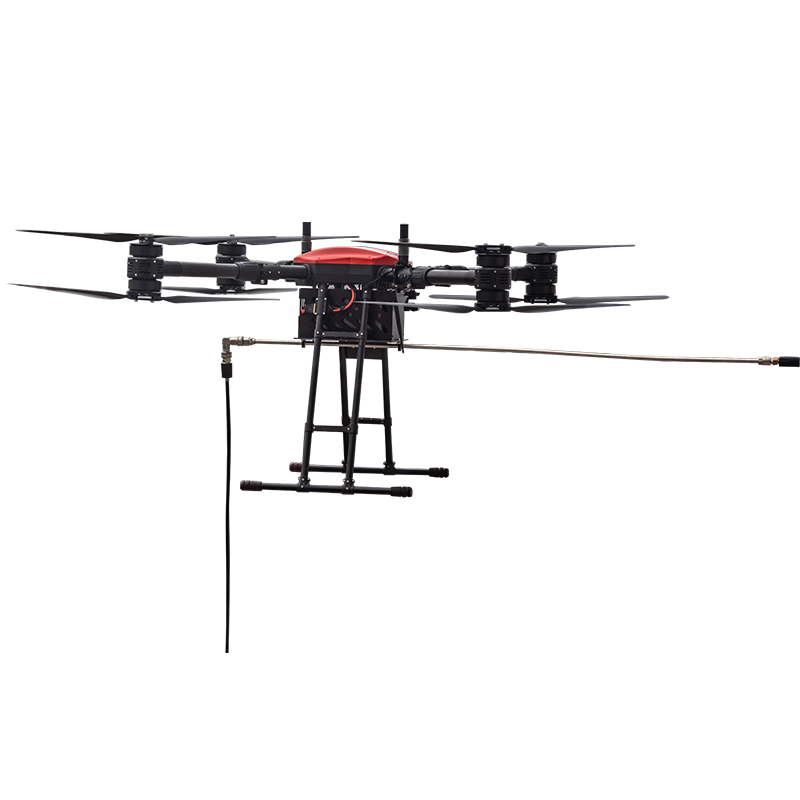
The Real Problem Was Never Flight. Here’s the thing. Getting a drone into the air stopped being impressive years ago. The difficult part is transporting meaningful cargo while maintaining reliability, controllability, and economic viability. A drone carrying a camera is one engineering problem. A drone carrying a generator, medical equipment, firefighting supplies, or construction materials is a completely different beast.
Payload creates cascading design penalties. More weight demands larger motors. Larger motors require larger batteries. Larger batteries increase structural loads. The airframe becomes heavier. Flight efficiency drops. Thermal management becomes harder. Then weather arrives and ruins everyone’s calculations. This is why many cargo drone projects looked promising on paper and struggled in operational environments.
The companies surviving today tend to focus less on flashy autonomous demonstrations and more on boring engineering details such as structural redundancy, field maintenance, payload integration, and mission economics. Boring wins. Quite often.
Why Heavy-Lift Cargo Drones Matter. The strongest business case for cargo drones isn’t urban delivery. It’s logistics where conventional transportation performs poorly. Think about mountain construction sites. Remote islands. Emergency response zones. Power grid projects. Disaster recovery operations. Military and civil defense logistics. A truck is usually cheaper than a drone. Nobody disputes that. But when roads disappear, flood, collapse, freeze, or require several hours of travel through difficult terrain, the equation changes rapidly.
Suddenly, flying 50 kg, 100 kg, or even several hundred kilograms directly to a destination becomes attractive. Not because aviation became cheap. Because delays became expensive. That distinction matters.
Many investors originally evaluated cargo drone companies against traditional transportation costs. A better comparison is often the cost of operational downtime, delayed repairs, interrupted construction schedules, or failed emergency response missions. Those numbers look very different.
To understand where the market currently stands, it’s useful to compare a practical industrial platform against emerging heavy-lift systems.
Seboar MRT100. The Seboar MRT100 focuses on industrial logistics rather than extreme payload records. Key specifications include: Maximum payload: 100 kg, Empty weight: 52 kg, Foldable transport design, Industrial logistics orientation. Applications in emergency supply delivery, construction support, and remote equipment transport
The MRT100 sits in a category increasingly popular across global markets: medium-heavy industrial logistics drones. Its design philosophy appears focused on deployability rather than maximum lifting capacity. The folding architecture is particularly relevant because transportation logistics often become a hidden cost for large UAV operators.
Many people compare drones only by payload. Operators rarely do. Field teams care about transportation, deployment speed, maintenance requirements, spare parts, and operational flexibility. A drone that lifts less but deploys faster may generate greater operational value over a year of real-world missions.
Emerging Ton-Class Platforms. The newly demonstrated Tuofeng 1500H represents a different philosophy. Instead of optimizing for transportability, it pushes toward helicopter-class cargo capability:
Maximum takeoff weight: 1.5 tons
Maximum payload: 700 kg
Operational ceiling around 6,000 meters
Claimed endurance exceeding 6 hours with a 500 kg load
Designed for high-altitude and extreme-environment missions
This places it closer to a strategic logistics asset than a traditional industrial UAV. The engineering challenge here is substantial. Once payloads approach several hundred kilograms, structural fatigue, power management, vibration control, and flight redundancy become significantly more demanding than what is typically encountered in the 30–100 kg category.
Comparison With European and Russian Market Trends. European cargo drone development has generally emphasized certification, operational safety, and integration into civilian airspace systems. Russian heavy UAV programs, by contrast, have often prioritized range, ruggedness, and operation in difficult environmental conditions.
Interestingly, Chinese cargo drone development appears increasingly focused on scaling payload capacity while maintaining autonomous operation. The result is a market where different regions are optimizing for different constraints. Europe often optimizes for regulation. Russia often optimizes for harsh environments. China increasingly optimizes for logistics scale.
Companies like Seboar occupy a practical middle ground, targeting industrial users who need meaningful payload capacity without stepping into the complexity and cost associated with ton-class aircraft. That’s a very different market segment. And probably a larger one.
The Hidden Battle: Economics. People love discussing payload. They should probably discuss utilization instead. Imagine two cargo drones. One lifts 700 kg. The other lifts 100 kg. Most headlines automatically crown the 700 kg machine the winner.
Yet if the smaller platform flies five times more missions per week, requires fewer operators, consumes less energy, and costs dramatically less to maintain, the economics can become surprisingly competitive.
Aircraft capability matters. Fleet efficiency matters more. This pattern shows up repeatedly in aviation history. The largest aircraft rarely become the most commercially successful. The ones that balance performance, operating cost, and reliability usually win. Cargo drones will likely follow the same path.
Weather Is Still the Boss. Every cargo drone company eventually encounters the same reality. Physics does not negotiate. Marketing departments sometimes do. Wind, temperature, icing, turbulence, and battery performance remain stubborn limitations.
The Tuofeng 1500H’s reported ability to operate from -25°C to 55°C and withstand significant wind conditions reflects an industry-wide recognition that environmental resilience may become a bigger competitive advantage than raw payload capacity.
A cargo drone that performs consistently in bad conditions often creates more value than one that sets payload records on clear days. Operators understand this immediately. Investors occasionally need longer. What Happens Next? Cargo drone companies are entering an awkward but fascinating phase. The technology works. The question is no longer whether drones can transport cargo. The question is where they can do so more efficiently than existing alternatives. That sounds less exciting. It’s actually more important. Markets mature when engineering replaces hype. We’re starting to see exactly that happen.
Some companies will chase ever-larger payload capacities. Others will focus on specialized industrial missions. Some will build logistics networks. Others will sell aircraft platforms. No single strategy is guaranteed to dominate. What seems increasingly clear is that cargo drones are evolving from experimental aircraft into infrastructure tools. And infrastructure rarely attracts headlines. It just quietly changes how work gets done.
I have a feeling that the most successful cargo drone companies over the next decade won’t be the ones with massive aircraft, but rather those that have solved the problem of high logistics costs.