
Flight control is short for flight control system. It acts like our brain, helping to stabilize the drone’s flight attitude while it’s in flight, processing flight data, and executing flight commands.
The old assumption was obvious: add wireless connectivity, make configuration easier, and call it progress. That logic is aging badly.
Back in the early 2020s, flight controllers were often explained as simple “brains” of the aircraft. They collected sensor data, calculated attitude changes, and sent commands to motors or servos. That description was accurate, but incomplete.
A modern flight control system is no longer just a stabilization board. It is becoming an integrated control layer handling attitude control, sensor processing, communication commands, mission control, and safety management functions.
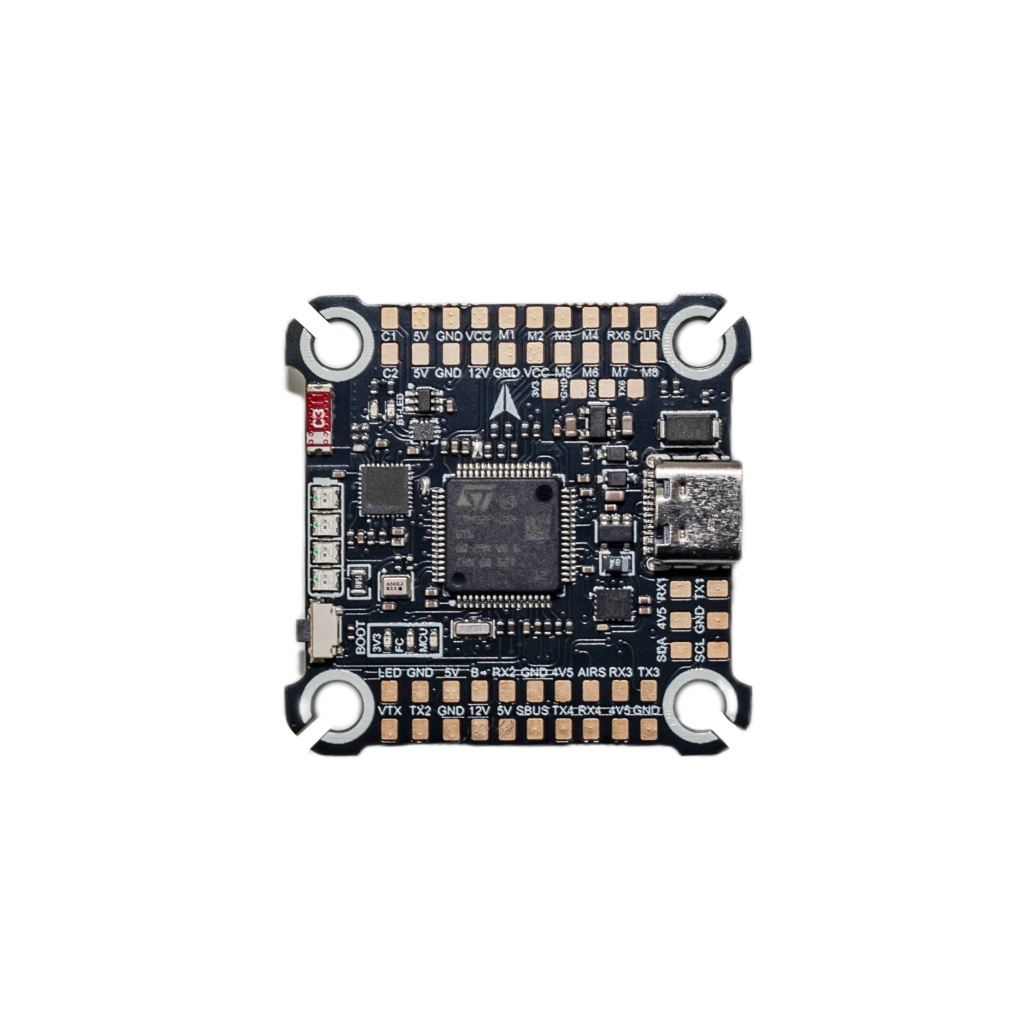
That shift changes the entire Bluetooth conversation. Here’s the thing: Bluetooth solves a user interface problem. It does not solve the harder engineering problems happening inside modern autonomous aircraft.
Range. Reliability. Latency. Electromagnetic interference. Secure communication. Those are the battles happening now. A Bluetooth connection between a pilot and a flight controller might be acceptable for bench configuration, firmware updates, or short-distance setup work. But expecting Bluetooth to become a primary control channel for serious unmanned systems is where the old thinking breaks.
Look, this is where many technical discussions get stuck. People compare a flight controller from years ago with a current-generation system as if the only difference is processor speed.
Wrong battlefield. The aircraft ecosystem itself has changed.
Modern avionics development is expanding across flight control systems, sensors, electronic components, basic software, energy systems, and payload-related systems. The industry is also pushing further into low-altitude applications and artificial intelligence-related sectors.
The flight controller is no longer sitting alone in the center of the aircraft.
It is becoming part of a network. A networked aircraft needs communication architecture designed around mission requirements, not convenience features. Wait, let me check that assumption again—no, Bluetooth was never designed to carry the responsibility of a full unmanned aircraft communication backbone. It was designed for short-range wireless connectivity.
That difference matters. The old model: Pilot sends command. Controller reacts. Aircraft moves. The newer model: Sensors generate continuous data. Processors interpret the environment. Control algorithms adjust behavior. Communication systems coordinate tasks. Safety systems monitor failures. The aircraft becomes a moving computing platform.
This is why the market is seeing stronger demand for advanced UAV flight control systems. Related revenue growth exceeded 100% year-on-year in 2026 as UAV demand increased.
The numbers are showing the engineering reality. The market is not simply buying more drones. It is demanding smarter control systems. Ground control station shipments are also expected to increase in the second half of 2026, showing that unmanned operations are moving toward larger command-and-control ecosystems rather than isolated remote devices.
That is the part many Bluetooth discussions miss. A flight controller is only one node. The real system includes the aircraft, ground station, sensors, communication links, power systems, and mission software.
Small detail. Huge consequence. The older “Bluetooth equals smarter drone” idea came from consumer electronics thinking. It worked when drones were mostly recreational machines where convenience mattered more than operational complexity.
That world is shrinking. Industrial and professional UAVs now care about predictable performance.
A connection that works perfectly on a workbench can fail completely when surrounded by motors, carbon structures, radio interference, changing distances, and unpredictable operating conditions.
Let’s be real for a second: engineers do not lose sleep because a drone cannot connect to a phone app. They lose sleep because a control system behaves differently after thousands of vibration cycles, temperature changes, signal disruptions, and mission hours.
That is the real test. Power architecture is also becoming part of the same evolution. Battery backup modules are entering mass production stages in 2026, reflecting increasing attention toward system reliability rather than basic flight capability.
The industry is moving away from “can it fly?” That question is already too easy. The harder questions are: Can it maintain control when communication conditions degrade? Can it process sensor information fast enough? Can it recover from abnormal situations? Can operators trust the data link? Bluetooth has a place. Just not the throne.
It is a useful tool inside a much larger architecture. Configuration, maintenance, diagnostics, and local interaction can benefit from it. But the future flight controller is being defined by integration, computing capability, and system-level reliability.
In the past, when people thought of drones, they simply wanted a “small aircraft” they could use. But now, in 2026, things are completely different. People’s expectations have risen to a whole new level; everyone wants drones to maintain predictable flight paths. That is the most challenging part.