
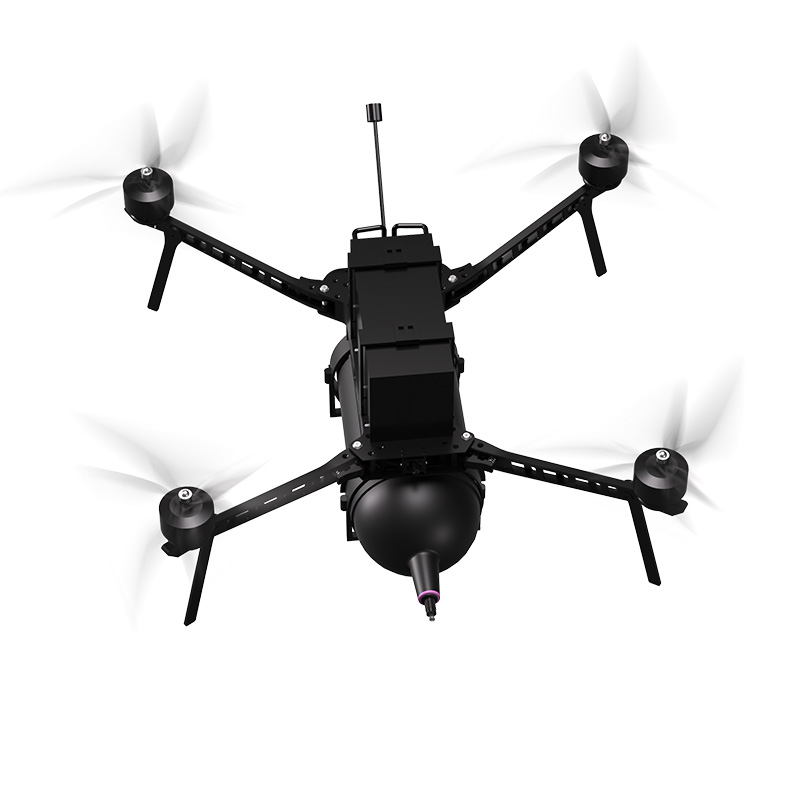
Fiber optics are usually associated with speed. That is the consumer version of the story.
The more interesting version is what happens when the same physical principle is taken out of a data center and dragged through a battlefield behind a flying machine. By 2026, fiber-optic control links are no longer just an alternative to radio. They have become part of a broader shift in how unmanned systems survive electronic warfare, transmit video, and operate where radio-frequency emissions can expose them.
And no, this does not mean a military drone is somehow using the fastest fiber optic internet in the world. The comparison is technically wrong.
The underlying transmission medium is similar. The engineering problem is completely different.
Fiber Optics Were Never Really About Internet Speed. A conventional fiber-optic internet connection is engineered around bandwidth, latency, reliability, network architecture, and enormous aggregate data capacity. A fiber-optic FPV drone is dealing with a much uglier constraint: it needs a physical cable to remain connected while the aircraft moves, turns, accelerates, climbs, dives, and potentially crashes. That distinction matters.
The 2026 battlefield evidence shows why the technology became attractive. Fiber-optic FPV systems reportedly transmit data through a physical fiber-optic cable rather than radiating radio-frequency electromagnetic signals into the surrounding environment. That changes the electronic signature of the aircraft.
The drone is not magically invisible. Its motors still generate noise. Its electronics still exist. Its optical and thermal sensors still observe the environment. But the control-and-video link itself is no longer broadcasting a conventional RF signal through the air, which reduces exposure to radio-based detection and electronic-warning systems. That is the real engineering advantage. Not internet speed.
The Old Assumption Was Simple: Radio Is Enough. For years, the standard unmanned-aircraft architecture was straightforward: radio control, radio telemetry, radio video. It worked because the electromagnetic environment was treated as relatively benign. That assumption aged badly.
The older description of fiber-optic drones often focused on two obvious characteristics: resistance to electronic interference and the ability to maintain a high-quality video connection. The August 2026 reporting also emphasized another problem created by the architecture—the fiber cable remains behind after the aircraft is gone, producing physical waste across forests, fields, rooftops, and other terrain.
That environmental cost is real enough to deserve attention. But stopping the technical analysis there misses what happened next. The technology did not merely become another type of FPV link. It became part of a much broader unmanned-systems architecture.
From a Cable Behind an FPV Drone to a 15–35 km Control Problem. One of the harder numbers to ignore is the reported 15–35 km fiber-optic spool carried by a modern fiber-optic FPV system. That is an absurd amount of physical infrastructure to make airborne.
Every extra kilometer introduces mechanical and operational problems. The spool adds mass. The cable must unwind without snagging. Turns create changing tension. Vegetation becomes an obstacle. Buildings become traps. Acceleration changes the loading on the cable.
Wait, let me look at that from the systems side—this is precisely why calling fiber-optic FPV simply a “radio-free drone” misses the point. The cable replaces one class of vulnerability with another.
Radio interference becomes less relevant, but mechanical entanglement becomes more relevant. Electromagnetic exposure is reduced, but the aircraft becomes physically tethered to its launch point. The operator gains a communications advantage while inheriting a logistics problem that cannot be solved with software. That is a genuine engineering trade.
The Battlefield Has Started Testing the Trade at Aircraft Scale. The reported March 20, 2026 engagement near Nadizhka village in the Krasnohorivka direction illustrates how far this concept has moved beyond the original low-cost FPV mission.
According to the supplied reporting, a UAV tactical group from the 1st Infantry Battalion of Ukraine’s 59th Assault Brigade conducted a reported FPV attack against a Russian Ka-52 more than 5 km from the frontline. The reported aircraft was valued at approximately US$16 million. The same source describes the event as the first reported fiber-optic FPV air-to-air kill worldwide.
That claim should be treated as a reported characterization rather than an independently established universal historical fact. But the engineering implication does not depend on the headline.
A small unmanned aircraft carrying a physical communications link can potentially operate inside an environment where conventional radio-control systems face electronic interference and detection risks. That changes the economic equation between the attacker and the target.
The numbers make the point without requiring marketing language. A reported Ka-52 loss was valued at roughly US$16 million. A separate reported engagement involved a Javelin anti-tank missile costing approximately US$80,000 being used against a Su-25 valued at approximately US$11 million.
Different weapons. Different operational conditions. Same uncomfortable question: How much expensive hardware does a military need to expose to destroy something substantially more expensive?
The Cable Is Only One Piece of the Evolution. The more significant change is not the fiber itself. It is the networking architecture developing around unmanned platforms. A reported September 2026 engagement involved an 80-second operational video showing a Ukrainian unmanned surface vessel engaging and sinking another unmanned vessel.
The same reporting says the Sagan-3000 unmanned surface vessel integrates Ukraine’s Delta battlefield situational-awareness system for real-time video transmission. The platform reportedly has a 1,600 km cruising radius, a maximum speed of 55 knots, and a payload capacity of 450 kg. Those numbers describe something fundamentally different from the cheap, disposable FPV drone that dominates public discussion.
The system reportedly combines multi-channel anti-jamming satellite communications, optical navigation, and autonomous inertial navigation. It can also reportedly be configured as a rocket launcher, electronic-warfare jamming platform, or FPV-drone carrier.
That is not a single-purpose remote-control vehicle. It is an unmanned systems node. And this is where the old fiber-optic-drone narrative starts looking incomplete. The technology story is no longer simply “radio versus cable.” Modern unmanned platforms are increasingly mixing physical links, satellite communications, inertial navigation, optical sensing, autonomous functions, and battlefield data networks according to the mission.
The Fastest Fiber Optic Internet in the World Is the Wrong Benchmark. Here’s the thing: comparing battlefield fiber optics with the fastest fiber-optic internet in the world produces a misleading metric. Consumer networks care about throughput.
An unmanned combat system may care more about whether the connection survives deliberate interference, whether the operator receives usable video, whether the aircraft remains controllable at low altitude, and whether the communication method exposes the platform.
Those are radically different definitions of performance. A fiber-optic internet backbone can carry enormous quantities of information through fixed infrastructure designed to protect the cable. A fiber-optic FPV aircraft drags its communication infrastructure behind itself. One is optimized for bandwidth. The other is optimized around survivability in a hostile electromagnetic environment. The fastest connection is therefore not automatically the most useful connection.
Then Versus Now: The Design Assumption Has Changed. The older battlefield model assumed that communications were primarily an invisible electromagnetic service. The newer model treats communications as part of the physical architecture of the vehicle.That is a major change.
The reported 15–35 km spool demonstrates the extreme version of this idea. Instead of trying to make a radio link more resistant to interference, engineers physically connect the aircraft to its operator. Brute force. There is nothing elegant about dragging tens of kilometers of fiber behind a disposable aircraft. But engineering is not a beauty contest.
If the alternative is losing control of the aircraft because an adversary dominates the radio-frequency environment, the ugly solution can become the practical solution. And then comes the bill.
The August 2026 environmental reporting described fiber cables accumulating across Ukrainian forests and other terrain, with some reporting describing cables extending for many kilometers. The supplied older article also noted concerns about wildlife becoming entangled in discarded fiber.
That creates a peculiar engineering contradiction: the same physical characteristic that makes the communications system difficult to jam also makes the physical waste difficult to eliminate. The cable is both the solution and the residue.
The Bigger Lesson Is Not About Fiber. The 2026 developments point toward a wider change in unmanned-system design. The reported Ukrainian operation involving a flight of nearly 3,000 km against infrastructure near Novy Urengoy demonstrates how far unmanned operations can extend beyond the short-range FPV model.
The reported Russian plan to receive 150–230 unmanned vessels during 2026 points in another direction: scale. These are not isolated improvements to a single drone component. They indicate a movement toward distributed unmanned systems in which communications, navigation, payloads, autonomy, electronic warfare, and expendability are designed as parts of the same operational architecture.
That makes the old question—”How fast is the drone?”—increasingly incomplete. A more useful engineering question is: What communications architecture can keep the vehicle useful under the exact conditions where the adversary is actively trying to make it useless? Sometimes the answer is radio. Sometimes it is satellite communications. Sometimes it is autonomous navigation. And sometimes, remarkably, it is a spool of fiber trailing behind a $500-class aircraft.
Fiber Optics Did Not Make the Battlefield Simpler. They made one problem harder to solve. That is the part technology marketing tends to skip. Fiber-optic control removes or reduces one category of RF vulnerability, but introduces cable weight, drag, mechanical failure modes, deployment constraints, entanglement risks, and environmental contamination.
Meanwhile, larger unmanned systems are combining anti-jamming satellite communications, optical navigation, inertial navigation, real-time battlefield data, and modular payload configurations. The result is not one universal replacement for radio. It is a fragmented communications ecosystem designed around different failure modes. That is the real 2026 lesson.
The fastest fiber optic internet in the world may be measured in bandwidth and latency. A battlefield fiber-optic system is measured by a harsher standard: whether the link remains functional when somebody is deliberately trying to break it. Those are two completely different engineering questions.
And confusing them is how yesterday’s specifications become tomorrow’s obsolete assumptions.