
The drone industry keeps making the same mistake: it thinks the next generation of FPV platforms will be defined by speed, payload, or camera resolution. That is a comfortable story. It is also incomplete.
The real competition is moving somewhere far less obvious — into the ability to deploy, hide, repair, and scale thousands of small unmanned systems inside an environment where airspace, maritime activity, and even rocket trajectories are becoming part of the same surveillance problem.
Look, a foldable FPV drone is not interesting because someone managed to add hinges to a carbon frame. That is a consumer electronics mindset applied to a military engineering problem. The real engineering challenge is whether a compact airframe can survive repeated transport cycles, rapid assembly, inconsistent field conditions, and electronic warfare pressure without becoming another fragile piece of expensive equipment.
One aircraft. Seven vessels. No large-scale exercise. A traditional military analysis might classify this as a low-intensity event. But modern security competition is no longer measured only by the number of platforms deployed at one moment. The pressure comes from maintaining persistent awareness across multiple domains — air, sea, and increasingly space.
Here’s the thing: a defense network does not collapse because it cannot detect a hundred aircraft. It struggles when it must continuously process hundreds of small signals, determine intent, and decide whether each movement is routine, strategic, or a precursor to something larger.
That changes the role of unmanned systems. Small FPV drones, especially foldable designs, fit into this environment because their value is not only kinetic. Their value is distribution.
A vehicle that can be transported in a backpack, assembled quickly, launched from unconventional locations, and replaced cheaply creates a different operational equation. It becomes less like a traditional aircraft and more like a disposable sensor and response node.
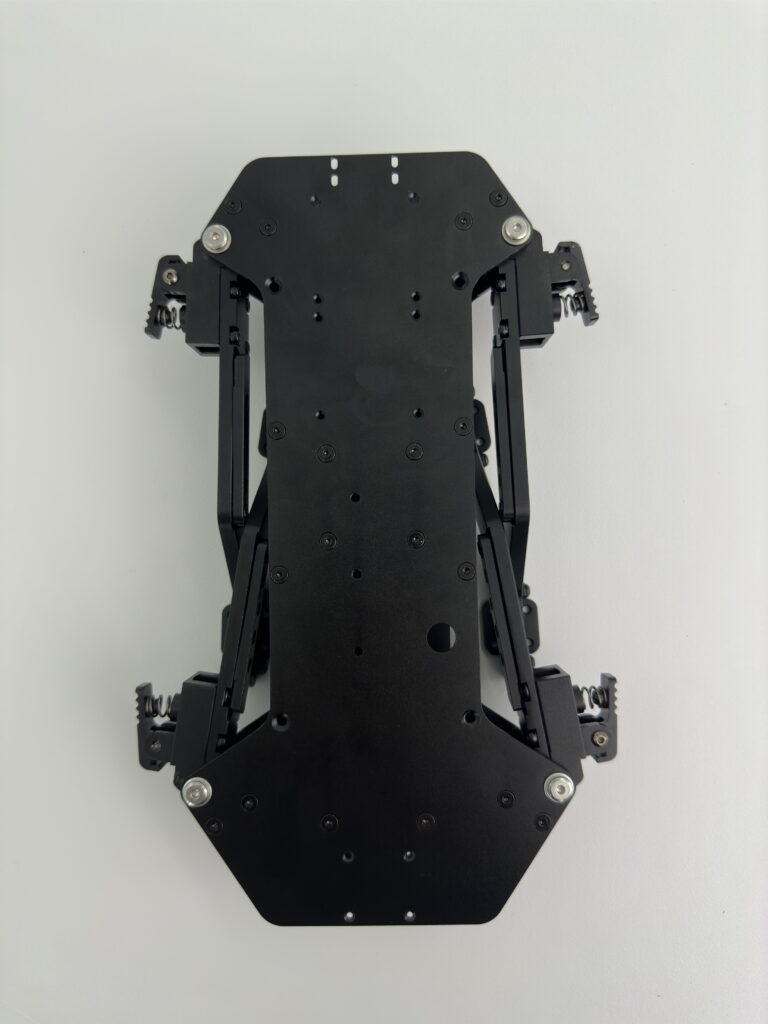
Wait, let me correct one common assumption here: compact does not automatically mean effective.
A smaller drone introduces its own engineering problems. Folding mechanisms add mechanical failure points. Compact arms and joints must survive vibration from high-RPM motors. Antenna placement becomes more difficult because the frame has less available space for proper RF separation. Battery packaging becomes a compromise between energy density, cooling, and impact resistance.
The folding mechanism is easy. Making it reliable after hundreds of deployment cycles is the hard part. The bigger strategic issue is not just aircraft activity. It is the growing overlap between aerospace operations and regional security monitoring.
China is scheduled to conduct a rocket launch from the Taiyuan Satellite Launch Center on July 30, 2026, with the launch trajectory heading toward the western Pacific and passing through Taiwan’s Air Defense Identification Zone (ADIZ).
The public discussion naturally focuses on one question: does the rocket entering the ADIZ create a security concern? That question is too narrow.
The deeper issue is how governments distinguish between commercial space activity, military-related launches, and routine aerospace operations when all of them increasingly share the same airspace management challenges.
Rocket launches require trajectory planning, debris management, and temporary airspace restrictions. Monitoring systems must understand not only aircraft movement but also launch windows, orbital objectives, and potential impact zones.
Traditional air defense is becoming something closer to aerospace traffic management. A radar system looking only for aircraft is no longer enough. Future monitoring networks will likely combine:
– Aircraft detection systems
– Maritime tracking platforms
– Space situational awareness systems
– Satellite monitoring
– Launch warning networks
The battlefield is expanding upward. And this is where foldable FPV drone manufacturers face a different challenge than they did a few years ago.
The market is crowded with companies chasing maximum specifications: higher speed, longer range, heavier payloads. Those numbers attract attention, but they do not automatically solve operational problems.
A drone that flies 200 km/h but requires complicated transportation, specialized tools, and fragile maintenance procedures may be less useful than a slower platform that can be deployed repeatedly by ordinary operators.
Let’s be real for a second: modern conflicts have exposed a brutal truth. Production capacity, repairability, and logistics often matter more than laboratory performance.
The next generation of FPV systems will likely be judged by questions such as:
Can hundreds of units be stored efficiently? Can damaged components be replaced quickly? Can operators configure the system without factory-level support? Can the platform survive electronic interference and unpredictable field conditions?
These are manufacturing questions, not marketing questions. For companies building foldable FPV drones, the engineering target is moving away from creating a “better drone” and toward creating a scalable unmanned system.
The future belongs to manufacturers that understand the entire chain — mechanical design, electronics integration, supply logistics, field maintenance, and operational deployment.
Because the next conflict environment will not be defined by one impressive drone. It will be defined by thousands of ordinary ones that keep working.