
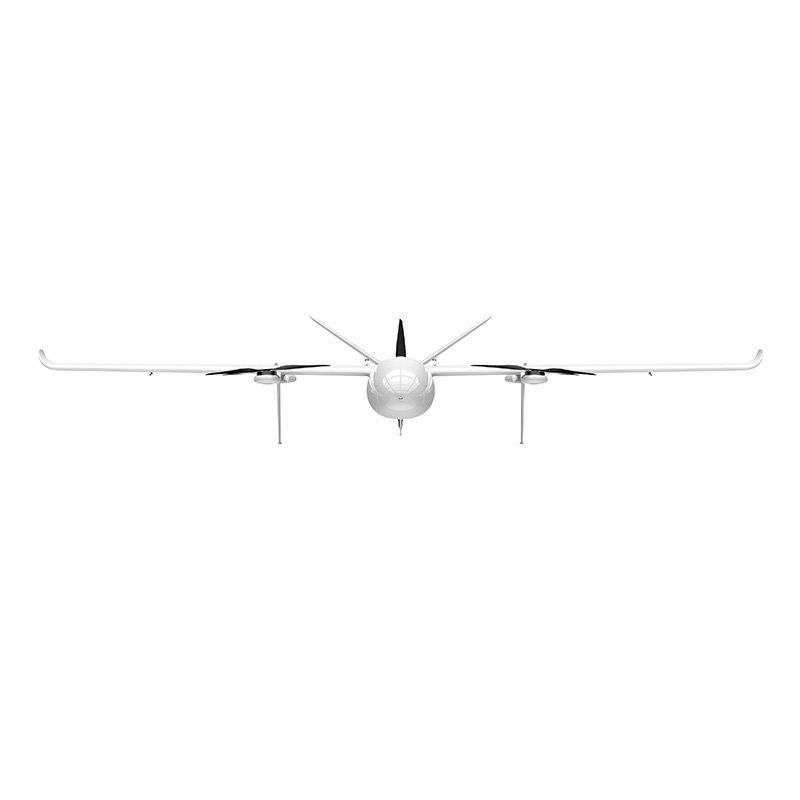
A fixed wing hybrid endurance figure is useful only when the aircraft model and payload stay attached to it. On Seboar’s ROC WING family page, the MD section places “12kg Payload” beside “220-Minute Endurance” in a heading. The specification table assigns those figures to different model-and-load entries. It does not state that one aircraft flies for 220 minutes while carrying 12 kg.
For a civil inspection quotation, start with the relevant row rather than joining the largest numbers on the page. Then confirm which configuration the supplier is quoting. There is a further qualification here: the standalone MD product pages display different flight-time statements, without a revision mapping that establishes how those statements relate to the family table. These are published specification statements, not independently verified flight results.
Read the model and load before the duration
The model-by-load endurance entries distinguish MD-25 from MD-35. They also retain explicit load conditions. Read the following as a guide to those printed entries, rather than a consolidated performance specification.
| Published entry | What belongs with that figure |
|---|---|
| MD-25 endurance | The family table states 3.67 h (220 min) at a 1 kg load. Keep all three identifiers—MD-25, 220 minutes and 1 kg—together. |
| MD-35 endurance | The family table states 160 min at 5 kg, at least 140 min at 7 kg, and at least 60 min at 12 kg. Those are three specified load-and-time pairings, not one duration that applies to every payload. |
| Maximum useful payload | The family table lists MD-25 at 3 kg, with 1.2 kg labeled standard, and MD-35 at 12 kg, with 5 kg labeled standard. These payload entries do not replace the load conditions attached to the endurance entries. |
The distinction matters when a buyer copies figures into a requirements sheet. An MD-35 requirement for a 12 kg load should not acquire the MD-25’s 220-minute figure through a shared family heading. Equally, a maximum useful payload entry should not silently become the load used for every quoted flight time.
Keep the inequality signs as well. “At least 60 minutes” is a different statement from an unqualified “60 minutes.” None of these entries supplies an endurance curve for loads between the printed points, so the table alone does not justify interpolation or a new flight-time estimate.
Separate page statements from an applicable configuration
The standalone MD-25 product page lists up to 60 minutes for standard cruise and up to 80 minutes with an optional extended-endurance battery. That differs from the family table’s 220-minute entry at a 1 kg load. The product page also qualifies its figures by test conditions and operating variables; it does not provide a mapping that reconciles the two presentations.
The payload-qualified MD-35 flight-time statement is “up to 90 minutes,” depending on payload. That row does not identify a numeric payload. It therefore cannot be treated as another fully specified point alongside the family table’s 5 kg, 7 kg and 12 kg entries.
Do not choose whichever page offers the longer duration, average the figures, or assume a battery option explains the difference. The available page statements do not establish that explanation. They also do not identify a common effective specification revision for the comparison. Until the applicable configuration is confirmed, the unresolved item is the scope of the quoted figure—not a demonstrated flight outcome.
Build one traceable endurance record for the quotation
Ask for a dated record that names the model, configuration, payload and endurance statement together. It should identify the source document or revision that governs the quotation. If a different figure appears elsewhere on the website, request written clarification of which statement applies to the offered aircraft and why the other entry should not be used for that order.
For the payload, ask what the stated load includes. A camera label alone does not establish whether the quoted load accounts for its mounting and associated equipment. For the aircraft configuration, request the specified battery and any option on which the duration depends. These are clarification requests; the public entries above do not supply the complete installation or test record.
Keep the acceptance discussion separate from a website number. Ask which operating conditions, flight-time definition and reserve assumptions will be used to evaluate the proposed inspection configuration. Agree those conditions before treating an endurance statement as an acceptance requirement. The broader VTOL mission and configuration checks provide context for that discussion, while the endurance record keeps the chosen figure tied to its own model and load.
A usable quotation should leave the buyer with one identifiable configuration and one applicable basis for the endurance claim. If that basis remains unresolved, record it as open. A shorter, clearly scoped statement is more useful for an equipment decision than a combined headline whose payload and duration came from different rows.