
The biggest mistake in evaluating drone infrared camera price in 2026 is still the same one from years ago: people compare cameras by hardware labels instead of engineering capability.
A thermal sensor. An optical camera. An AI vision module. These categories are collapsing. The old approach was simple. Bigger sensor. Higher resolution. Higher price. That logic is already breaking.
Look, the camera market moved faster than most drone buyers expected. A modern imaging system is no longer just a lens attached to a processor. It is a tightly integrated stack of optics, stabilization, computation, thermal control, and software. That changes the price equation completely.
A camera system designed for autonomous platforms now competes with technologies originally built for compact intelligent imaging devices. In 2026, advanced handheld imaging systems are already combining multiple sensors, AI tracking, and precision mechanical structures that would have looked excessive only a few years ago.
One camera is no longer just one camera. A newer generation of compact imaging hardware has demonstrated configurations combining a large primary sensor and a secondary telephoto sensor in the same system. One example describes a dual-camera architecture using a 1-inch 8K main camera and a 1/1.3-inch telephoto camera.
That matters for drone applications because infrared camera pricing is not only about the infrared module itself. The surrounding system determines whether the sensor can actually deliver useful information during flight.
A cheap sensor with poor stabilization, weak processing, or slow target recognition can become an expensive failure. Wait, let me look at that assumption again — no, the old “buy the highest resolution sensor” mindset is completely outdated now.
The industry shift is toward computational imaging. Modern compact camera platforms are integrating AI subject tracking, advanced stabilization algorithms, and multi-camera designs into small form factors.
The same engineering pressure exists in drones. A flying platform has vibration, movement, changing light conditions, limited power, and strict weight restrictions. A sensor that works perfectly on a desk may perform poorly when mounted on a high-speed aircraft.
Here’s the thing: price follows engineering difficulty, not marketing specifications.
Global handheld smart camera shipments were reported to increase 33% year-over-year in Q1 2026, showing that demand is moving toward smarter imaging devices rather than simple recording hardware. This growth also reveals a larger trend. Imaging systems are becoming miniature computing platforms.
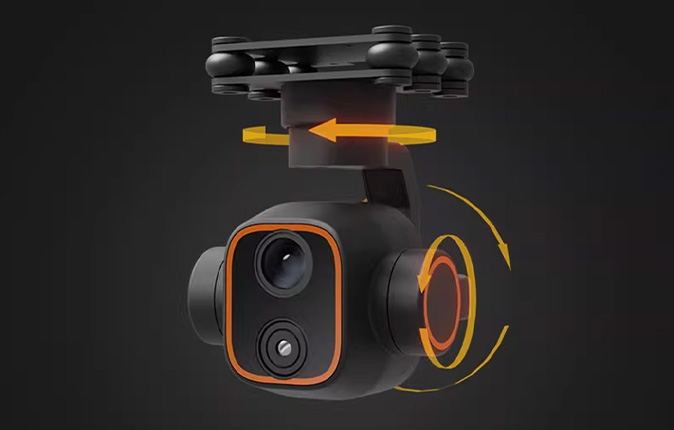
For drone operators evaluating infrared camera price, the real questions are different: Can the system maintain image quality during movement? Can it separate targets from background noise? Can it process information fast enough for autonomous decisions? Can the hardware survive vibration and temperature changes?
The expensive part is rarely the sensor alone. Thermal management is becoming a hidden engineering cost. Compact dual-sensor systems now require careful heat control and mechanical precision within millimeter-level constraints to maintain performance.
That is exactly where many low-cost drone camera solutions fail. They reduce the component price while ignoring the integration problem.
A lower invoice does not always mean lower operational cost. Japan’s video camera market data in 2026 was reported to show Chinese brands exceeding 80% market share, with one leading manufacturer reaching 72.5% sales share.
That market movement reflects something important: hardware competition has shifted from simply manufacturing components to building complete imaging ecosystems.
The companies winning are not necessarily producing the cheapest camera. They are reducing the distance between sensor data and useful action. For drones, this means the future of infrared camera pricing will likely separate into two very different categories.
Basic imaging modules will continue becoming cheaper. Advanced perception systems will become more valuable. The difference is intelligence. A thermal camera that only captures heat signatures is a component. A thermal imaging system that identifies, tracks, stabilizes, and supports decisions is a capability.
Let’s be real for a second. The drone industry spent years chasing flight time numbers and motor efficiency while underestimating the value of perception hardware. That mistake is becoming obvious.
The next generation of drones will not be defined only by how far they fly. They will be defined by how accurately they understand what they see. The old camera price model is dying.
The new question is not “How much does an infrared camera cost?” It is “How much useful information can this imaging system create per flight?” That is the metric shaping 2026.