
A VTOL wing drone can have ample battery capacity and a reliable radio link yet still be the wrong aircraft for a proposed survey route. The missing detail may be the operating framework behind the flight.
On February 4, 2026, Wingtra announced C3 and C6 certification for WingtraRAY, obtained through TÜV Rheinland. The manufacturer presents C6 as a step toward wider beyond-visual-line-of-sight (BVLOS) surveying opportunities. That is a useful development for civil mapping teams. It is also a reason to examine exactly what a certification announcement covers before turning it into a project promise.
The commercial question is straightforward: can the proposed aircraft, crew and site work together under the intended operating conditions? An endurance figure cannot answer that on its own.
C6 connects the aircraft to a defined operating scenario
EASA links the C6 class label to European standard scenario STS-02. All of the scenario’s conditions must be met. For an eligible operation, the operator submits a declaration to its national aviation authority and waits for confirmation of receipt and completeness before starting within the scenario’s limits.
This creates a useful distinction for anyone evaluating a VTOL wing drone. Aircraft conformity concerns the equipment. Operational eligibility also concerns the job being proposed. A supplier can provide evidence about the first; the operator still needs to establish the second.
Keep those questions separate in the project file. Otherwise, a procurement team may accept a valid equipment document while leaving the actual route assumptions unresolved. The gap can remain invisible until the survey team begins arranging access, staffing and launch locations.
The route needs more than an endurance estimate
The STS-02 provisions in EASA’s June 2026 rules compilation specify a controlled ground area in a sparsely populated environment. Without an airspace observer, the aircraft must remain within 1 km of the remote pilot and follow a preprogrammed trajectory when outside the pilot’s visual line of sight. With observers, the limits include 2 km from the pilot, 1 km from the nearest observer, and no more than 1 km between any observer and the pilot. Effective crew communications and adequate airspace coverage are also required.
Those are selected conditions, not the complete rule set. Training, visibility, aircraft systems and other requirements also apply. Crucially, the distances concern operating geometry; they do not describe how far the battery can propel the aircraft along its entire flight path.
For project planning, sketch the crew positions on the same map as the survey boundary. Then compare alternative setups. A launch point with convenient vehicle access may create a poor viewing position. A better viewing position may require a longer walk or additional site coordination. Neither problem appears in a maximum-range specification.
Consider a hypothetical corridor survey. Moving the crew between sections could change setup time, access arrangements and the number of repeat checks. That is a planning example, not a measured claim about any aircraft. Its purpose is to expose work that an aircraft-only comparison leaves out.
A stronger procurement question: what supports this particular job?
A useful tender should ask for a worked mission proposal alongside the hardware quotation. Start with the intended output: a map, an inspection record or another defined deliverable. Identify where the aircraft would fly, where the crew could stand and which assumptions need confirmation.
Then request the documentation for the exact configuration being quoted. Avoid accepting an unspecified family-level certification claim as evidence for a different build. The supplier should identify the applicable documents and the configuration they describe so the operator can evaluate them against the intended operation.
One practical review method is to maintain a short issue register with three columns: assumption, supporting evidence and responsible party. “Crew can access the western boundary” belongs there just as much as “the quoted system includes the required equipment.” An unresolved assumption should remain visible instead of disappearing into a general statement that the platform is suitable.
This is an analytical approach to procurement, not a certification test. It gives the buyer a way to compare proposals that otherwise look similar on paper.
When STS-02 does not fit
EASA explains that specific-category operations generally require an operational authorization, except where a standard scenario applies or the operator holds a Light UAS Operator Certificate with appropriate privileges. A project outside STS-02 therefore needs its actual regulatory route evaluated; a class label alone does not settle it.
For a buyer, that should become an early planning decision. Ask what evidence is available now, what work remains, and who owns that work. Avoid scheduling a service around an assumed permission that nobody has verified.
How to read a Seboar VTOL proposal alongside this news
The Seboar VTOL fixed-wing range provides a starting point for hardware discussions. This article does not establish C6 conformity or STS-02 eligibility for any Seboar configuration. Wingtra’s announcement concerns WingtraRAY; its certification cannot be transferred to another product by analogy.
For the aircraft comparison itself, the fixed-wing VTOL buying guide covers configuration questions such as mass, links and usable endurance. Pair that hardware review with a separate review of the proposed operation.
The practical lesson from the 2026 announcement is to put equipment evidence and route planning in the same purchasing conversation. A useful proposal lets the buyer trace each important assumption to a document, a site decision or an explicit unresolved question. That makes the next step clear before money and schedules depend on it.
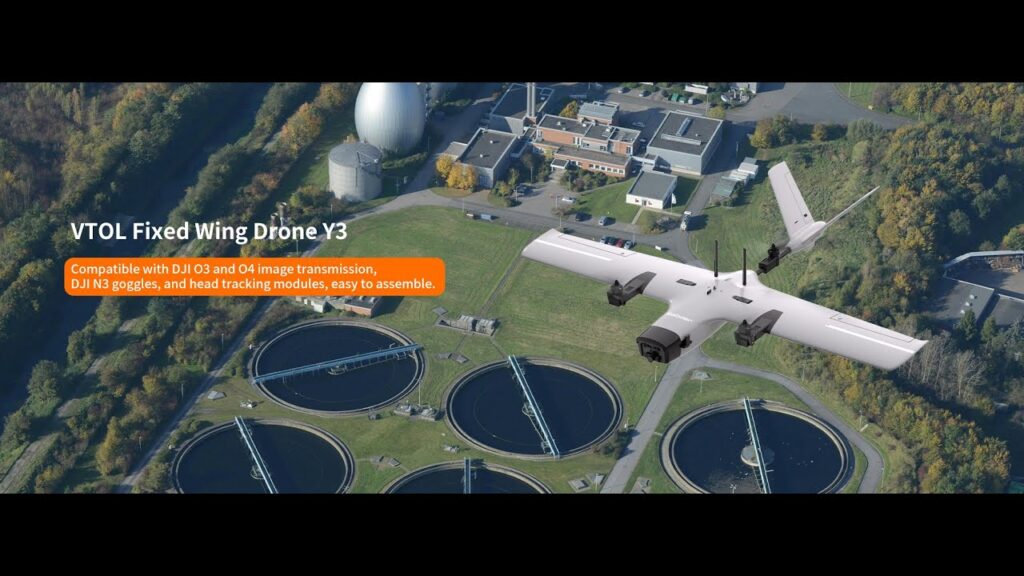
Featured image: Seboar Y3 illustration. It does not depict WingtraRAY or demonstrate a regulatory approval. Regulatory sources checked September 18, 2026; confirm the applicable requirements with the relevant authority before operating.