Industry News

Why the resolution of a drone’s thermal imaging camera is not important

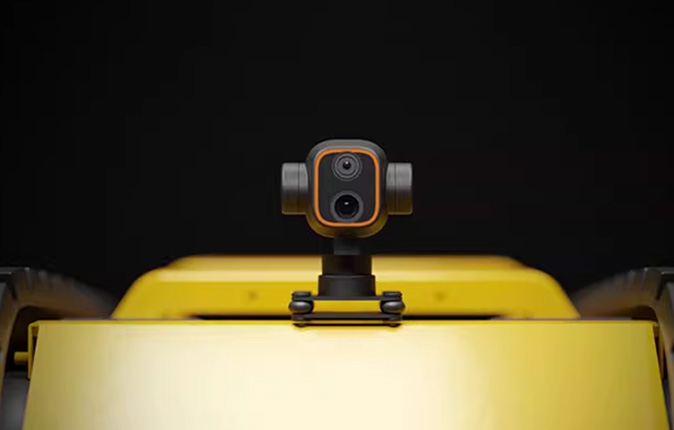
The thermal drone market has developed an unhealthy obsession with sensor resolution, and it’s producing remarkably mediocre aircraft. Every product sheet screams about detector pixels. Every launch event zooms into colorful heat maps. Meanwhile, almost nobody talks about electrical architecture, stabilization bandwidth, payload density, thermal latency, mounting constraints, or network integration. Those are the reasons

Why the resolution of a drone’s thermal imaging camera is not important Read More »
Original-quality video is increasingly becoming a burden.

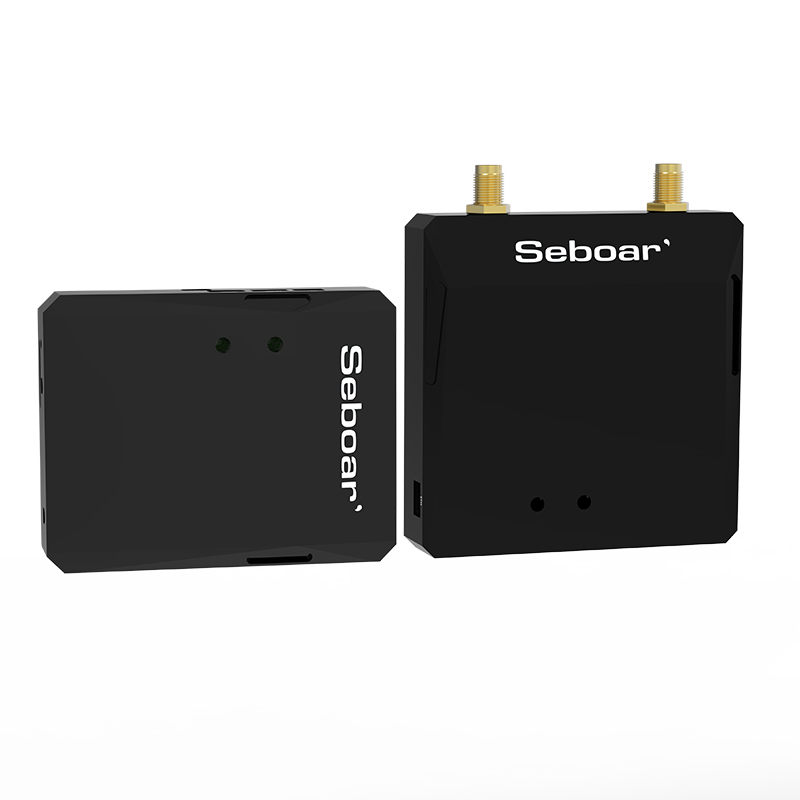
The drone industry has spent years blaming bandwidth for problems that were never really caused by bandwidth. Look, that’s an uncomfortable statement because it challenges one of the safest assumptions in satellite communications: more capacity automatically solves everything. It doesn’t. Sometimes it simply allows inefficient systems to waste data faster. The announcement of OneLinQ Edge

Original-quality video is increasingly becoming a burden. Read More »

Why Speed Isn’t the Most Important Thing About Cleaning Drones

There’s a common misconception about the solar energy industry: some people believe that because cleaning drones are so fast, the industry has a very promising future. This view is actually inaccurate. It’s incomplete. The real engineering shift isn’t measured in square meters per hour. It’s measured in how maintenance strategies are being redesigned around autonomous

Why Speed Isn’t the Most Important Thing About Cleaning Drones Read More »

The most important aspect of a cargo drone is not its payload

Whenever cargo drones go on sale, people immediately start discussing their payload capacity—whether it’s 30 kilograms, 100 kilograms, or even several metric tons. Then everyone stops asking the question that actually determines whether a transport UAV survives real operations: What happens to the aircraft structure when that payload is still hanging underneath after hundreds of

The most important aspect of a cargo drone is not its payload Read More »

Why are more and more people taking an interest in fiber-optic drones these days?

In recent years, the development of fiber-optic drones has followed a clear trajectory: the pursuit of more powerful jammers and more complex systems. They are driven by a very clear goal: to control the spectrum, and thereby take to the skies. 2026 has been unusually effective at destroying that assumption. A growing number of battlefield

Why are more and more people taking an interest in fiber-optic drones these days? Read More »

Cargo Drones Are Finally Being Built for Real Work

Currently, many people have a major misconception about cargo drones; they believe they are simply smaller versions of the delivery drones that drop off packages at suburban homes. People are paying a heavy price for their own cognitive biases. While media attention keeps circling around consumer drone experiments, a different segment of the industry has

Cargo Drones Are Finally Being Built for Real Work Read More »

Cleaning drones have gradually lost their original purpose…

Many people believe that the competition in the cleaning drone market is about who can fly more stably and clean more efficiently. But what’s truly interesting about this market is that in the future, the deciding factor may not be the drones themselves, but rather who can truly complete the entire cleaning process. For years,

Cleaning drones have gradually lost their original purpose… Read More »

If not payload capacity, what else can the best cargo drone rely on?

A few years ago, during a routine logistics transport test, I watched a heavy-duty drone “crash.” According to the specs, it was supposed to be able to lift 40 kilograms. With its high-power motor, oversized propellers, and carbon-fiber body, the promotional materials made it sound like it could do anything. But once we got to

If not payload capacity, what else can the best cargo drone rely on? Read More »

Can fiber-optic transceivers survive in electronic warfare?

While everyone was still focused on the price of fiber optic transceivers, the defense industry was quietly carrying out a major overhaul to bring fiber optics back into the market. As part of this, traditional radio links have been gradually phased out without fanfare. That’s the real story hiding behind SEDI-ATI’s February 2026 launch of

Can fiber-optic transceivers survive in electronic warfare? Read More »

A 2% Market Pretending to Be a 90% Future

Let’s start with the uncomfortable number. 2%. That’s the actual penetration rate of drone-based facade cleaning in 2024. Not 20%. Not “rapidly scaling.” Two. Percent. And yet, companies are already talking about owning over 90% of the future market. Look, that’s not confidence—that’s a signal. A very loud one. The pitch behind cleaning drones for

A 2% Market Pretending to Be a 90% Future Read More »

Shopping Cart
Scroll to Top