
Back in 2021, many observers believed FPV drones had a marketing problem. They were wrong. The real problem was friction.
Look at the historical FPV ecosystem. New users were expected to choose frames, flight controllers, ESCs, motors, antennas, video transmitters, receivers, batteries, firmware versions, radio protocols, and then somehow assemble everything without destroying a solder pad. That wasn’t a hobby barrier. It was an engineering entrance exam disguised as entertainment. And the market paid the price.
For years, FPV adoption was constrained not by a lack of excitement but by a lack of accessibility. The technology produced spectacular footage. The user experience produced headaches.
Fast forward to 2026. The conversation surrounding the Foldable FPV Drone frame has shifted dramatically. Not because drones suddenly became faster. Not because cameras became sharper. The architecture changed.
On May 29, 2026, a newly introduced FPV platform entered the market featuring a carbon-fiber frame combined with folding-arm construction . That single design choice says far more about industry evolution than most marketing campaigns ever could.
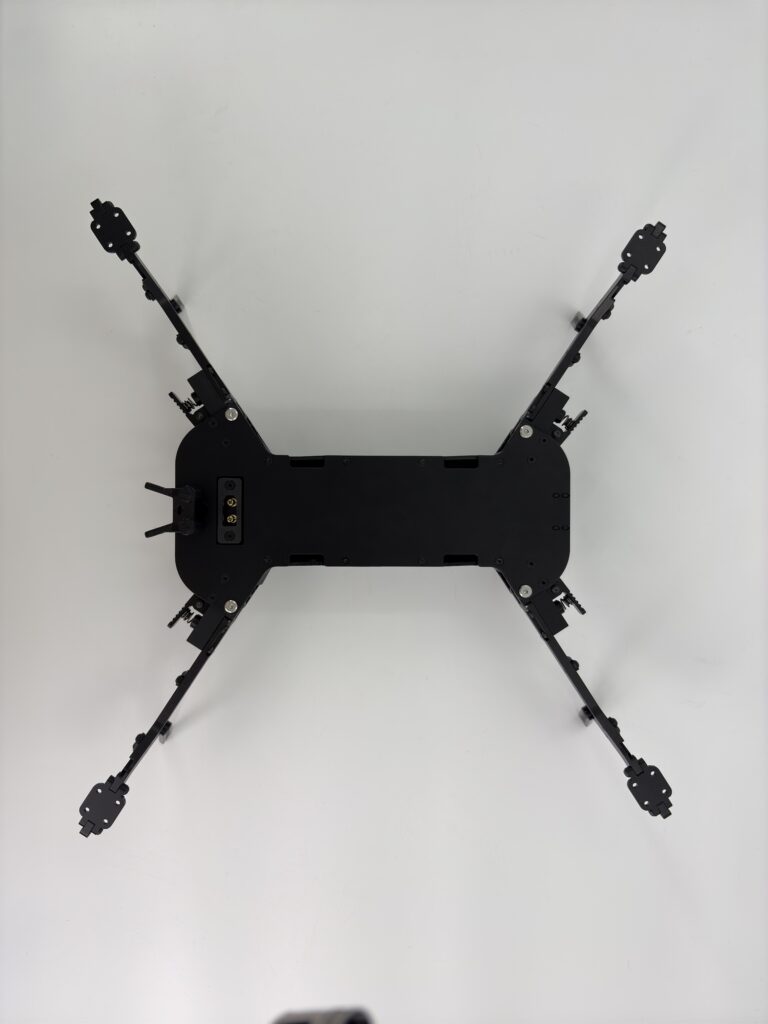
Here’s the thing. Early FPV culture treated portability as a secondary concern. Pilots accepted bulky transport cases, exposed propellers, awkward storage requirements, and extensive field preparation because the community was dominated by enthusiasts who valued performance above convenience.
That assumption no longer survives contact with today’s market. Modern operators expect transport efficiency. They expect deployment speed. They expect fewer mechanical headaches. A foldable frame directly addresses those demands.
And that’s where the historical narrative becomes interesting. The old FPV world rewarded technical obsession. The emerging 2026 ecosystem increasingly rewards operational efficiency. Those are not the same thing.
A carbon-fiber folding structure reflects an industry attempting to reduce logistical penalties without abandoning structural rigidity. Carbon fiber remains one of the few practical materials capable of maintaining high stiffness-to-weight characteristics while supporting repeated folding mechanisms. Designers have spent years trying to balance portability against durability.
Some succeeded. Many didn’t. Actually, let me correct that—most didn’t. The engineering challenge was never making arms fold. The challenge was making them fold repeatedly without introducing vibration issues, mechanical play, alignment inconsistencies, or long-term structural degradation.
That’s why folding designs historically appeared in bursts of enthusiasm followed by periods of skepticism. Field operators remember. The internet often forgets. Another revealing shift appears in system integration.
The 2021 article repeatedly described FPV as a collection of independent components requiring extensive user assembly and configuration. By contrast, the 2026 platform is supplied as a ready-to-fly package with complete accessories included.
That distinction matters. A lot. The FPV industry spent years assuming users wanted maximum customization. Market reality eventually revealed something less romantic: many potential customers simply wanted to fly. The difference between those two assumptions is worth millions.
Maybe more. The presence of integrated low-latency video transmission and precision remote-control systems also highlights how priorities have changed. Earlier FPV communities often accepted significant setup complexity because achieving low-latency flight required piecing together specialized components from multiple vendors.
Today, integrated architectures increasingly handle that burden. The pilot still benefits from responsive control. The pilot simply doesn’t have to become a radio-frequency engineer first.
That is a very different customer experience. Look, there is another historical misconception worth challenging. Many discussions from the previous decade framed FPV growth as a battle between “hardcore enthusiasts” and “mainstream consumers.”
Reality was messier. The market wasn’t rejecting FPV flying. The market was rejecting unnecessary complexity.
A foldable carbon-fiber frame, integrated control systems, built-in low-latency video transmission, and ready-to-fly deployment models collectively suggest an industry learning that lesson the hard way.
Even camera integration tells part of the story. The inclusion of a high-definition gimbal camera demonstrates how FPV platforms continue moving beyond pure racing and freestyle origins. Earlier generations often forced users into extensive modifications depending on whether the mission involved cinematic capture, exploration, inspection, or recreational flight.
Modern designs increasingly attempt to consolidate capabilities.
Whether that goal is fully achievable remains debatable. The laws of physics still exist. Mission specialization still matters. No single platform perfectly solves every operational scenario. That part of the 2021 analysis remains surprisingly accurate. But the gap between specialized systems and accessible systems is narrowing.
Rapidly. One detail deserves special attention. The manufacturer states that both flight-control and propulsion systems are internally developed. Historically, FPV ecosystems frequently relied on fragmented hardware stacks assembled from numerous independent suppliers. Self-developed control architectures suggest a broader trend toward vertical integration and tighter system optimization.
Wait, let me look at that assumption again—no, it doesn’t automatically mean better performance. And that’s an important distinction.
The available source provides no verified numerical specifications regarding speed, endurance, payload capacity, latency measurements, transmission range, or other measurable performance metrics.
In fact, the absence of those figures may be the most revealing fact in the entire dataset. Why? Because the FPV industry spent years obsessing over headline numbers. Speed. Range. Acceleration. Power. Meanwhile, many of the adoption bottlenecks were hiding elsewhere—in transportation, setup time, maintainability, learning curves, and deployment convenience.
Those factors rarely make exciting YouTube thumbnails. They do, however, influence real-world adoption. The historical FPV market was built by engineers, tinkerers, and enthusiasts willing to tolerate friction in exchange for capability. The 2026 Foldable FPV Drone frame represents something different.
Not a rejection of performance. A rejection of unnecessary inconvenience. And that may prove to be the more significant technological evolution.